As the holiday season approaches, visions of sugarplums and jolly old Saint Nicholas dance in our heads. But beneath the benevolent beard and twinkling eyes, lies a complex and sinister history that will make you question everything you thought you knew about Santa Claus.
The Origins of Terror
Saint Nicholas, a 4th-century bishop from Myra (modern-day Turkey), was renowned for his generosity and kindness. However, his legacy has been shrouded in darkness, influenced by ancient pagan rituals and folklore.
The Bogeyman of Christmas: In medieval Europe, Saint Nicholas was often depicted with a dark companion, Krampus or Zwarte Piet, who punished naughty children. This shadowy figure symbolized the consequences of misbehavior, striking fear into the hearts of youngsters.
Sinterklaas, the Kidnapper: In Dutch folklore, Sinterklaas (Saint Nicholas) was said to abduct children who misbehaved, taking them away in a sack. This unsettling tradition has its roots in ancient pagan rituals, where children were sacrificed to ensure fertility.
Nicholas, the Executioner: Some accounts suggest that Saint Nicholas was responsible for the execution of three children, whose souls he later restored. This gruesome tale has been linked to the pagan festival of Saturnalia, where human sacrifices were offered.
Folkloric Fears
As the centuries passed, Saint Nicholas’ image evolved, incorporating elements from various cultures and mythologies.
Ghostly Visitations: In Scandinavian folklore, Saint Nicholas was believed to haunt homes, seeking out disobedient children. His nocturnal visits inspired terror, rather than joy.
Yule Lads, the Harbingers of Doom: Iceland’s Yule Lads, 13 mischievous spirits, were said to torment naughty children over the 13 nights leading up to Christmas. Their pranks ranged from harmless to malevolent.
Modern Manifestations
The dark side of Saint Nicholas continues to influence contemporary culture.
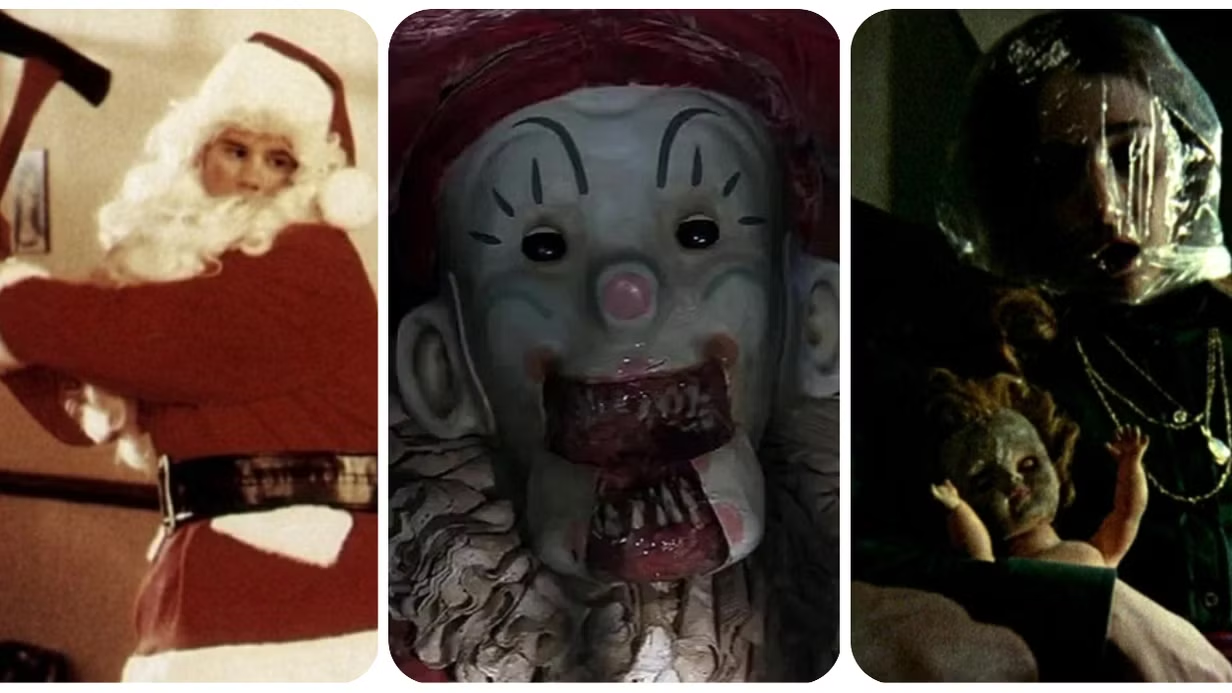
Horror Movies: Films like “Rare Exports” (2010) and “Krampus” (2015) have capitalized on the sinister aspects of Saint Nicholas’ folklore.
Haunted Attractions: Christmas-themed haunted houses and events have become increasingly popular, embracing the terrifying side of the holiday season.
Conclusion
As we deck the halls and jingle our bells, remember that the spirit of Saint Nicholas is complex, multifaceted, and sometimes sinister. Embracing the darker aspects of his history and folklore adds depth to our understanding of this iconic figure.
So, this holiday season, beware the shadowy figure lurking beneath the merry facade. For in the world of Saint Nicholas, terror and joy are intertwined, waiting to be unwrapped.
Recommended Reading and Viewing
For those eager to delve deeper into the dark side of Saint Nicholas:
“The Life and Legends of Saint Nicholas” by Jeremy Seal
“Krampus: The Yule Lord” by Brom
“Rare Exports” (2010) directed by Jalmari Helander
“Krampus” (2015) directed by Michael Dougherty
Share Your Thoughts
What’s your favorite dark Santa tale or horror movie? Do you think the sinister side of Saint Nicholas enhances or detracts from the holiday spirit? Join the discussion in the comments below.
Street Trash (2024) A Neon-Soaked Descent into Class Warfare and Practical Gore
Let’s cut through the bullshit and talk about Street Trash, Ryan Kruger’s bold reimagining of the 1987 cult classic that’s either going to make you fall in love with practical effects all over again or send you running for the nearest shower. This isn’t your typical horror remake cash grab – it’s a technicolor middle finger to authority that manages to say something meaningful while coating every available surface in rainbow-colored viscera.
If you want to check out our podcast hit play below, where we talk completely about Street Trash, if not continue scrolling down to read our review!
Here’s the deal: It’s 2050 in Cape Town, South Africa, and the government’s finally found a solution to the homeless problem – turn them into modern art installations by way of a mysterious melting agent. If that premise sounds familiar, you’ve probably seen the original. But where the ’87 version went for pure grindhouse insanity, Kruger’s take wants to have its cake and eat it too – serving up social commentary alongside chunks of dissolving flesh.
Let’s start with what absolutely works, because there’s plenty to love here. The practical effects are nothing short of spectacular. In an age where everything’s CGI and green screens, Street Trash commits to old-school prosthetics and bladder effects with religious fervor. Bodies don’t just die – they transform into kaleidoscopic puddles of goo that would make David Cronenberg slow clap in appreciation. Each death scene is a masterclass in practical gore, turning human dissolution into a twisted art form that’ll have gore-hounds rewinding frame by frame to catch every technicolor detail.
But here’s what really sets this film apart from your standard midnight movie fare: it actually gives a damn about its characters. Sean Cameron Michael’s Ronald isn’t just another soon-to-be-victim; he’s the heart of a makeshift family of outcasts that includes the philosophically inclined Chef (Joe Vaz), the drug-addled brothers Wors and Pap, and the delightfully unhinged 2-Bit with his imaginary alien friend Sockie. These aren’t just meat puppets waiting for their effects showcase – they’re fully realized characters whose deaths actually sting when they come.
The film’s setting in near-future South Africa adds layers of meaning that the original couldn’t touch. The parallels to apartheid and ongoing class struggles aren’t subtle, but they don’t need to be. When you’re watching homeless people literally dissolve into clouds of colorful mist, subtlety isn’t exactly the name of the game. Kruger uses his hometown of Cape Town as more than just a backdrop – it’s a character in itself, beautiful and broken in equal measure, its stark wealth divide providing the perfect stage for this story of systematic elimination of the poor.
That said, Street Trash isn’t without its problems. The villains, including a cartoonishly evil mayor and the barely-present Rat King, feel like they wandered in from a significantly less interesting movie. The film sometimes struggles to balance its Troma-style splatter comedy with serious commentary about class warfare and systematic oppression. When it works, it’s brilliant – there’s something darkly poetic about the government literally liquefying the poor. When it doesn’t, you get tonal whiplash severe enough to require a neck brace.
But just when you think the film might dissolve under the weight of its own ambitions, the third act kicks in like a shot of adrenaline straight to the heart. The movie suddenly transforms into a punk rock version of They Live, complete with homeless warriors taking up arms against their oppressors. It’s gloriously over-the-top and feels earned after all the melty brutality we’ve witnessed. The action sequences have raw energy that makes up for any earlier narrative stumbles, and watching the downtrodden rise up against their oppressors – while literally melting them into puddles – is satisfying on a primal level.
The technical elements elevate this beyond typical B-movie territory. The cinematography turns dystopian Cape Town into a character of its own, with neon-lit alleys and towering corporate buildings looming over makeshift shanty towns. The lighting during the melt sequences is particularly inspired, turning each death into a twisted light show. The soundtrack pulses with anarchic energy, perfectly matching the film’s rebellious spirit and providing a beating heart to the chaos.
Kruger peppers in references to genre classics like Escape from New York and Robocop, but unlike many modern homage-heavy films, these feel more like knowing winks than lazy copying. The film has its own identity, even if that identity sometimes feels like District 9 and Class of Nuke ‘Em High had a baby and raised it on a strict diet of political manifestos and food coloring.
What’s fascinating is how Kruger has transformed the original’s bottle of toxic hooch into a government-engineered substance. It’s a smart update that feels eerily relevant in our era of increasing wealth disparity and social control. The film suggests that the real horror isn’t the melting – it’s the systematic dehumanization that makes such elimination possible. When the homeless finally rise up in the third act, it feels less like exploitation and more like revolution.
Look, Street Trash 2024 isn’t perfect. It’s messy, occasionally unfocused, and sometimes tries to juggle too many ideas at once. But you know what? In a landscape of soulless horror remakes and sanitized social commentary, there’s something genuinely refreshing about a film that’s willing to get its hands dirty – and then melt those hands into a prismatic puddle of goo.
Is it as groundbreaking as the 1987 original? No. But it’s not trying to be. Instead, it’s carving out its own weird little niche in the pantheon of social horror, mixing legitimate anger about inequality with enough day-glo gore to fill a dozen midnight movies. If you can stomach the violence and don’t mind your social commentary served with a side of surreal humor and practical effects, Street Trash 2024 is worth your time.
Just maybe don’t eat anything blue, purple, or suspiciously rainbow-colored while watching it. And remember – sometimes the most effective way to discuss class warfare is through the lens of people literally dissolving into puddles of neon goo.
Rating: 3.5 out of 5 Melted Bodies
Content Warning: Extreme gore, body horror, political themes, and enough neon-colored viscera to make a Skittles commercial look understated.
Alright, you beautiful monsters, grab your darkest eyeliner, crank the guitar distortion to eleven, and let’s talk about why this upcoming summer is about to melt your pale […]
Updated August 2026: Creepypasta horror is having a moment — read our coverage of Blood and Honey and the Backrooms phenomenon. The title is a bit misleading. It […]
It’s that time. As is custom, I have to post my yearly Christmas-related article for the season. Actually, this one is going to be focusing on the Yule, […]
Okay, I need something Autumn related to make an article about. Fortunately, fellow horror author Grace Anderson recently released her Fall themed book, Fox Hollows, this past late […]