Spirit Boxes: The Complete Guide

Paranormal

4 min read

spirit boxes for paranormal investigation

Updated August 2026: After the hardware tour, try the software side: our EVP/ITC app list and the EVP beginner’s guide.

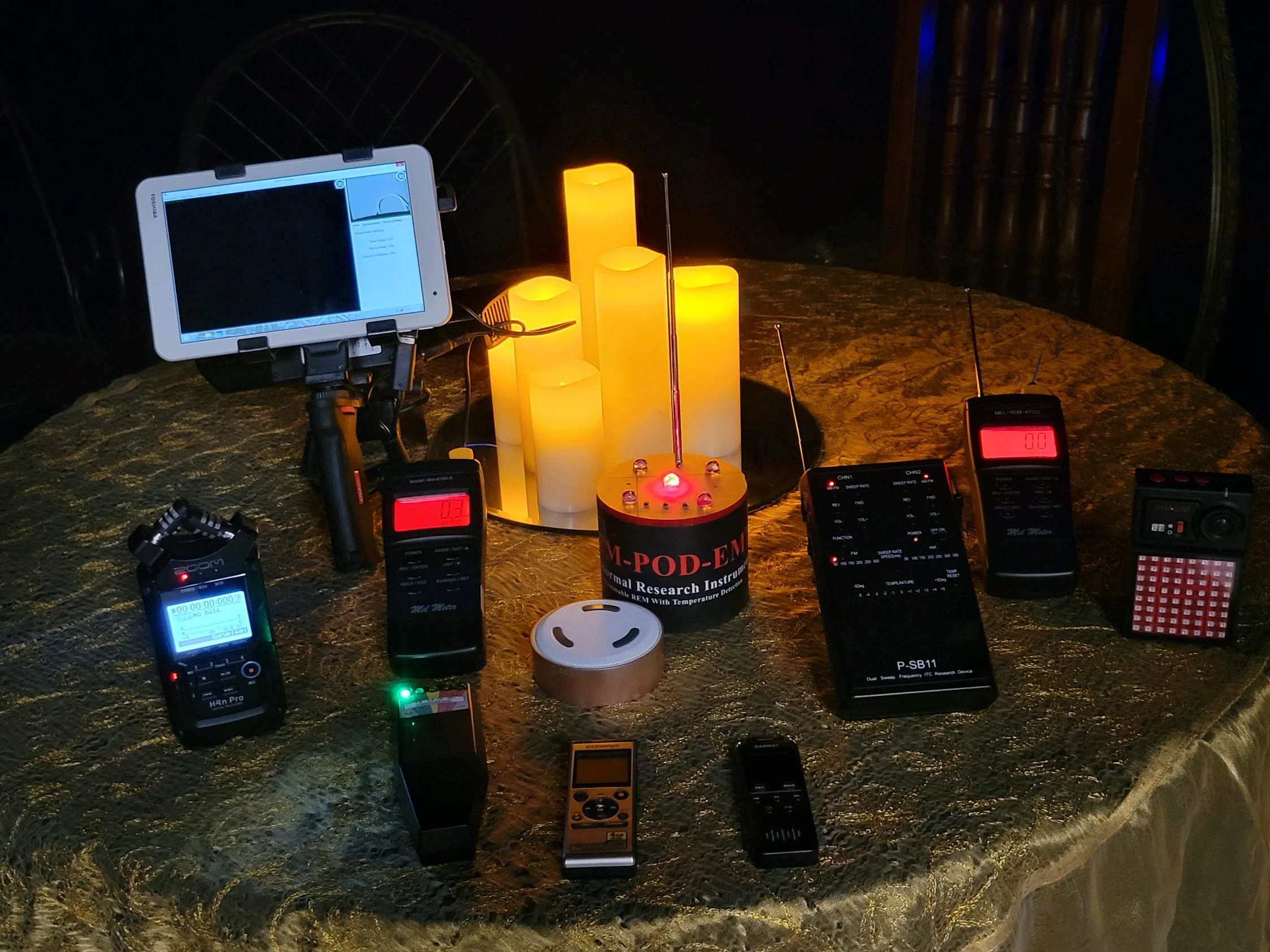
Spirit boxes, also known as ghost boxes, are devices used in paranormal investigations to communicate with spirits. They work by scanning radio frequencies to pick up sounds and voices from beyond the grave. In this article, we’ll delve into the world of spirit boxes, exploring their history, types, and uses, as well as the technology behind them.

History of Spirit Boxes

The concept of spirit boxes dates back to the early 20th century, when paranormal investigators began experimenting with radios to capture spirit voices. However, it wasn’t until the 2000s that spirit boxes gained popularity, thanks to the rise of paranormal TV shows and the availability of affordable, modified radios.

Types of Spirit Boxes

There are several types of spirit boxes available, each with its unique features and capabilities:

  1. Radio Frequency (RF) Spirit Boxes: Dedicated devices designed for spirit communication, scanning radio frequencies rapidly to pick up sounds and voices.
  2. Modified Radios: Regular radios altered to scan frequencies rapidly, similar to RF spirit boxes. They can be homemade or purchased pre-modified.
  3. Apps and Software: Digital tools mimicking the functionality of RF spirit boxes, available for mobile devices and computers.

Popular Spirit Box Apps

Some popular spirit box apps include:

  • Necrophonic (iOS, Android): Uses a combination of algorithms and radio frequency scanning to generate sounds and voices. [1]
  • Spirit Talker (iOS, Android): Employs advanced technology to detect and interpret spirit voices. [2]
  • Spirit Box (Android, iOS)
  • Ghost Box (Android, iOS)
  • SB7 Spirit Box (Windows)
  • ParaBox (Android)

Other Types of Spirit Boxes

  • Infrared (IR) Spirit Boxes: Use infrared sensors to detect temperature changes and pick up sounds.
  • Frequency Hopping Spirit Boxes: Rapidly switch between different frequencies to pick up sounds.
  • Dual-Scan Spirit Boxes: Scan two frequencies simultaneously to pick up sounds.
  • Reverse Spirit Boxes: Play audio in reverse to pick up sounds and voices.

How Spirit Boxes Work

Spirit boxes work by rapidly scanning radio frequencies to pick up sounds and voices. This is achieved through various methods, including:

  • Frequency Scanning: Rapidly switching between different frequencies to pick up sounds.
  • Algorithms: Using complex algorithms to generate sounds and voices.

Using Spirit Boxes for Paranormal Investigation

Spirit boxes are a popular tool among paranormal investigators, used to:

  • Communicate with Spirits: Attempt to communicate with spirits, gathering evidence and detecting paranormal activity.
  • Gather Evidence: Capture audio evidence of spirit voices and sounds.
  • Detect Paranormal Activity: Use spirit boxes to detect unusual activity and anomalies.

Safety Precautions

When using spirit boxes, it’s essential to take safety precautions, including:

  • Setting Boundaries: Establishing clear boundaries and guidelines for spirit communication.
  • Using Protection Techniques: Employing protection techniques, such as smudging or using protective symbols.
  • Being Mindful of Negative Energies: Being aware of negative energies and taking steps to mitigate them.

Criticism and Skepticism

Spirit boxes are not without controversy, with many skeptics questioning their effectiveness and validity. Criticisms include:

  • Lack of Scientific Evidence: Limited scientific evidence supporting the effectiveness of spirit boxes.
  • Misinterpretation of Sounds: Sounds and voices captured by spirit boxes can be misinterpreted or misidentified.
  • Hoaxes and Deception: Some spirit box sessions can be staged or faked.

Conclusion

Spirit boxes are a fascinating tool for paranormal investigation, offering a unique way to communicate with spirits and gather evidence. While their effectiveness is disputed, they remain a popular tool among paranormal enthusiasts and investigators. By understanding the different types of spirit boxes, their technology, and safety precautions, users can maximize their experience and potential results.

References:

[1] HorrorFacts. (n.d.). Necrophonic: How Does the Spirit Box App Really Work? Retrieved from https://horrorfacts.com/necrophonic-how-does-the-spirit-box-app-really-work/

[2] HorrorFacts. (n.d.). Is Spirit Talker The Real Deal? A Look At Technology And The Paranormal. Retrieved from https://horrorfacts.com/is-spirit-talker-the-real-deal-a-look-at-technology-and-the-paranormal/

About the Author

Next article

From Poster to Screen: The Misleading Promise of ‘Cardiac Arrest’ (1979)

Movie ReviewsRetro Horror

5 min read

Cardiac Arrest

I recently had the opportunity to revisit the 1979 thriller “Cardiac Arrest,” and I must say, it was quite a different experience from what I initially expected. I was drawn to this movie by its provocative poster art – a pair of blood-soaked hands cradling a human heart. However, the film itself turned out to be a far cry from the gory spectacle promised by its marketing.

Directed by Murray Mintz, “Cardiac Arrest” follows the story of a serial killer stalking the streets of San Francisco, surgically removing the hearts of their victims. At the center of the investigation is Clancey Higgins, played by Garry Goodrow, a homicide detective with a weak stomach who finds himself diving deep into the murky world of black market organ transplants.

From the outset, I was struck by the film’s decidedly televisual quality. Rather than the visceral, graphic horror I had anticipated, “Cardiac Arrest” plays out more like an extended episode of a 1970s police procedural. This isn’t necessarily a bad thing, but it does require a significant adjustment of expectations for viewers lured in by the film’s sensationalist marketing.

Cardiac Arrest

Goodrow’s portrayal of Higgins is one of the film’s stronger points. He brings a refreshing authenticity to the role, eschewing the typical hard-boiled detective stereotype for a more nuanced, flawed character. His partnership with Wylie Wong, played by Michael Paul Chan, provides some of the film’s more engaging moments. Chan, in particular, delivers a naturalistic performance that often steals scenes from his co-star.

I was particularly intrigued by the inclusion of Maxwell Gail in the cast. Known for his role as “Wojo” on the popular TV series “Barney Miller,” Gail brings a touch of small-screen star power to the production. Although his role as Leigh Gregory, a man desperately seeking a heart transplant for his wife, is relatively small, Gail manages to infuse his limited screen time with genuine pathos.

The film’s attempt to blend medical drama with police procedural elements is ambitious, if not entirely successful. The exploration of the black market organ trade adds an interesting layer to the plot, but I found that it often got bogged down in lengthy, exposition-heavy dialogue scenes that sapped the narrative of momentum.

One of the most frustrating aspects of “Cardiac Arrest” for me was its reluctance to fully commit to its more gruesome elements. For a film centered around a killer who surgically removes hearts, there’s a surprising lack of on-screen violence or gore. While I appreciate that not every thriller needs to be a bloodbath, the restrained approach here feels at odds with the film’s premise and marketing.

The procedural aspects of the film also left me wanting. As someone who’s watched countless crime dramas and police procedurals over the years, I found myself repeatedly pulled out of the story by the characters’ cavalier approach to police work. Scenes of officers mishandling evidence or conducting warrantless searches strained credibility, even for a film of this era.

That said, I did appreciate some of the quirky character details sprinkled throughout the script. Higgins playing the recorder or driving a police-issued truck instead of a car are the kinds of small touches that help breathe life into what could otherwise be stock characters.

Visually, “Cardiac Arrest” is very much a product of its time. The cinematography is workmanlike, with a muted color palette that occasionally veers into the literally beige. While this approach lends a certain gritty realism to the proceedings, it also contributes to the film’s overall lack of visual flair.

As the plot unfolded, I found myself increasingly frustrated by the number of unanswered questions and logical inconsistencies. The use of curare poison by the killer, for instance, is never fully explained, nor is it addressed how the recipients of the stolen hearts avoid curare poisoning themselves. These kinds of plot holes, while perhaps not deal-breakers for some viewers, significantly impacted my enjoyment of the film.

The pacing of “Cardiac Arrest” is perhaps its greatest weakness. At 95 minutes, the film feels oddly stretched, as if there wasn’t quite enough story to fill a feature-length runtime. The investigation often meanders, with long stretches of dialogue that do little to advance the plot or build tension.

https://www.youtube.com/watch?v=p31bUWrHiEc

It’s a film that seems caught between two worlds – not quite gritty enough to satisfy horror fans, yet too offbeat to work as a straightforward police procedural. While it has its moments, particularly in some of the performances, it ultimately fails to live up to the promise of its evocative title and poster art.

For genre completists or fans of obscure 1970s thrillers, “Cardiac Arrest” might be worth a watch. However, viewers expecting a heart-pounding, gore-soaked experience will likely find themselves disappointed. What we’re left with is a film that, much like its protagonist, seems a bit queasy about fully embracing its more gruesome aspects.

In retrospect, “Cardiac Arrest” serves as a reminder that sometimes the most intriguing part of a film can be the gap between its marketing and its actual content. While it may not have delivered the visceral thrills I was hoping for, it did provide an interesting, if flawed, glimpse into a particular moment in thriller cinema history.

About the Author

Load next article From Poster to Screen: The Misleading Promise of ‘Cardiac Arrest’ (1979)