Nightbitch: A Darkly Honest Exploration of Parenting

Movie Reviews

6 min read

Nightbitch is a dark exploration into the perils of motherhood and the sacrifice many mothers have to make for the betterment of their children. While the film attempts to initially be a combination of dark comedy, body horror, and a bleak, unflinching glimpse into motherhood, portraying it not as a joyous experience like most would have you believe, but instead as a slow, perpetual hell. These elements are abandoned midway through the film and we are left with the story of a mother trying to find herself amid the chaos that has become her life.


In the starring role as Mother, Amy Adams plays a woman who after giving birth to her son, chose to put her art career on hold so she could spend time raising her child, while this seemed like a good idea at the time, she now has come to realize the perpetual hell that she has found herself in, this almost Groundhog Day like cycle of having to wake up, cook breakfast, go to the grocery store, and essentially repeat the same thing day after day. But unlike Groundhog Day, some days Mother finds herself in an even deeper level of hell, especially on days when she is forced to go to her local library for Book Babies.


This opening act of the film is where most of the dark comedic elements come into play. Mother wants nothing more than to tell people how she really feels, but instead tells people what they want to hear—assuring them that she’s fine, that she loves her new purpose, and that she has everything under control. In reality, her life is a nightmare of sleepless nights, endless chores, and a husband so absent he may as well be a ghost.
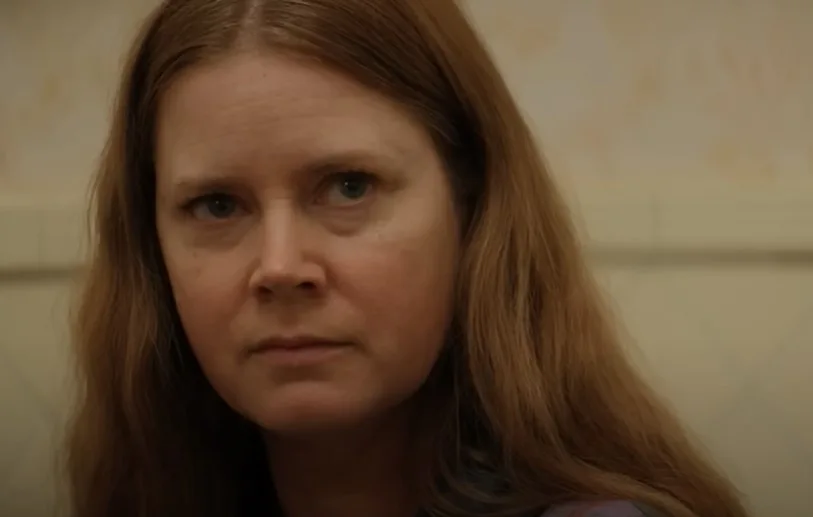

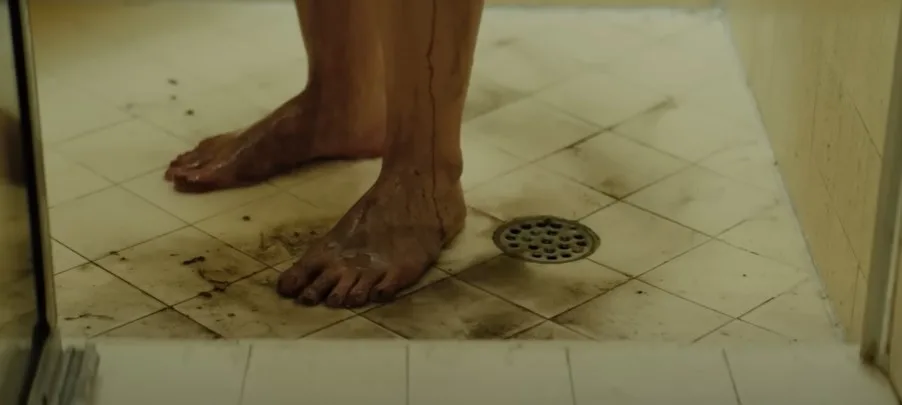
It’s also during this initial setup that Nightbitch begins to introduce its attempts at incorporating horror elements into the film. As her psyche begins to strain under the pressures of motherhood, she begins to start noticing unexplained changes in her body, as she discovers hair sprouting in unexpected places, her teeth sharpening, and a sore on her back that oozes pus and canine hair, teasing this possibility that Mother is undergoing this primal metamorphous, becoming something more beast than human.


Perhaps pushed to her breaking point by the combination of her inept husband, who, along with their son, expects her to be on top of everything, Mother begins to give in to this newfound animalistic side of herself, and with it comes this euphoric sense of freedom, this letting go of all of the perceived expectations society has put on her.


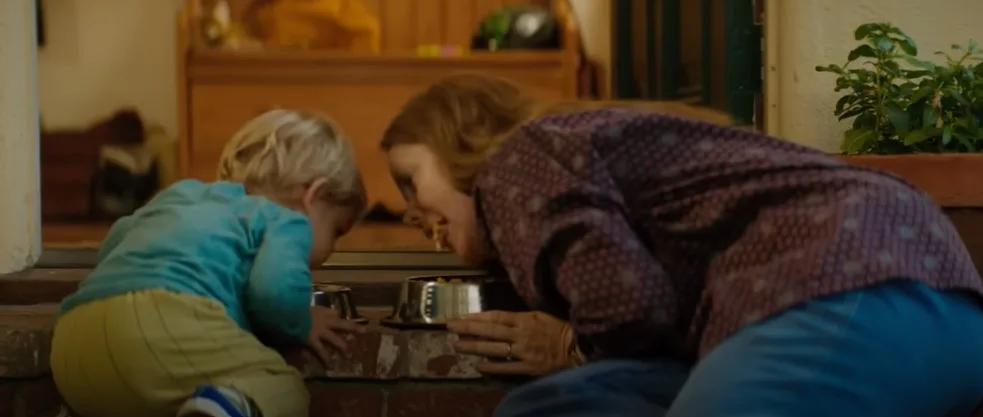
She begins to act like a dog, crawling around on all fours through the backyard, digging holes in the dirt, and even encouraging her young son to join in on her new feral mindset. She even has him eating out of dog bowls on the floor and sleeping in a bed designed for dogs, much to the dismay of her husband, who finds these actions quite concerning.
But as she begins to outwardly get a grip on her life, now finding the sleep that so desperately alluded her, she is also faced with this new realization that the life she once had is gone and she is left to mourn it alone, unable to find solace in her husband who is clueless to the inner turmoil she is going through.
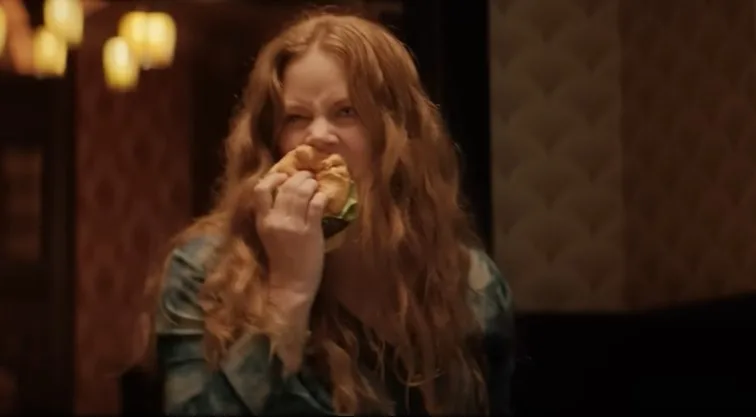
After building to a crescendo of Mother truly turning into a beast, barking at her friends while they dine in a fancy restaurant and taking to the streets like a dog, only to come home and in a dream-like state tear the family cat to pieces, this story arc is then seeming abandoned, taking with it any comedic and horror elements it had been peppering in throughout the film.
It’s here where Nightbitch takes on a more serious tone, with Mother deciding that she doesn’t want to keep living this new life she has regrettably found herself in. Mother confronts the emptiness of her life and the realization that she is not happy in her marriage. She decides to use this newfound power not to give in to this crazy animal side of herself, but instead use this newly discovered power to take back the life she desperately craves again – her old life.


As she attempts to regain control over her life, it’s here where the husband begins to play a more pivotal role in the film, finding himself being forced to confront the responsibilities of having a child that he had taken for granted for so long.
The film then becomes a story of self-discovery as Mother begins her healing journey to reclaim her identity, coming to the realization that just because you have a child doesn’t mean you have to give up on your dreams.

Ultimately, Nightbitch feels like two separate films, with the first half taking a more cynical look at motherhood, through the lens of body horror and dark comedy. While the second half, still compelling, completely abandons any concept of Mother turning into a beast, that it had been leading up to and instead becomes more of a slower-paced conventional drama about the realistic struggles couples face in their relationships.  


It’s important to note that while this film promotes itself to be a horror film, it couldn’t be further from the truth. The horror, in this case, is not from physical transformations, but from the all-too-real struggles of being a mother and the sacrifices women must make in their day-to-day lives in order to raise their children. That’s not to say that Nightbitch isn’t a good film, it’s still an interesting take on parenting, an often never showcased glimpse of the emotional toll having a child can have on someone’s life, acting like a painfully honest representation of motherhood.

Amy Adams carries the film with her performance as Mother, with her ability to showcase a character who is constantly trying to keep it together while being pushed to her limits. Credit also goes to Scoot McNairy as the Husband character. For the limited amount he is on screen his cavalier style of parenting helps to reinforce the struggles that Mother is going through, leaving you to understand how she truly feels alone as a parent.

Nightbitch is not a movie for horror fans. Instead, it uses horror elements to mimic the real struggles of motherhood, from the relentless monotony to the struggles of just trying to take care of yourself. Nightbitch’s greatest horror is not in the physical transformations but the all-too-relatable trials of raising a child and wondering if the life you once dreamed of is gone forever.

Nightbitch deserves credit for its willingness to tackle difficult subject matter. It’s a deep examination of both the brutal reality of being of a mother, coupled with the lengths a mother will go to raise her child. There’s beauty in that, to be sure. But for a film that starts with such teeth, it’s disappointing to see it lose its bite.

About the Author

  • Josie

    I have come here to chew bubblegum and write horror, and I'm all out of bubblegum.

    Recent Posts
    No Recent Posts by this Author

Next article

Romero’s Resident Evil: Untold Story

Movie Reviews

6 min read

Updated August 2026: Romero’s unfinished legacy explored in Survival of the Dead reassessed and the Dawn facts file.

We need to discuss Brandon Salisbury’s new documentary “George A. Romero’s Resident Evil“. It’s not just another story about missed chances; it’s a brilliant exploration of how Hollywood can misunderstand both gaming culture and the horror genre. There’s a lot to consider here.

The Father of Zombies and His Legacy

First off, George A. Romero is a must-mention when discussing zombies. This man didn’t just shape the modern zombie genre; he created a cultural movement that endures to this day.

When Resident Evil (known as Biohazard in Japan) debuted in 1996, it wasn’t merely paying tribute to Romero; it was building its entire foundation on his work.

The documentary reveals how Shinji Mikami, the mind behind Resident Evil, was crafting a heartfelt tribute to Romero’s films.

The tight spaces, the slow-building tension, and the social themes wrapped in horror were all there. You can see where Romero’s “Dawn of the Dead” inspired not just the zombies’ movements but also the focus on survival rather than pure action.

The film even includes critical moments where Mikami clearly states, “Without Romero’s films, there would be no Resident Evil.” This isn’t an exaggeration; it’s the truth.

The Game-Changing Commercial

Things take an exciting turn here. Capcom, showing more wisdom than many companies, hired Romero to direct a commercial for Resident Evil 2.

Picture this: It’s 1998, and Resident Evil is riding high off its first game’s success. Capcom’s sitting on a goldmine, but here’s the genius part – they actually understand why their game works. Instead of just throwing money at some random commercial director, they go straight to the source. They call Romero.

This live-action ad cost almost a million dollars in the late 1990s. The documentary features unseen behind-the-scenes clips of Romero directing Brad Renfro, effectively turning it into a mini horror film.

The commercial was a hit, and this is where the journey should have begun. Instead, it all went off the rails.

The Corporate Roadblock for Romero

Meet the real villain: Constantine Films, the German company that held the movie rights.

Through interviews with former executives and leaked memos, the documentary shows how they completely missed what Romero wanted and what made Resident Evil tick.

Romero’s script drafts, which are discussed at length, reveal his vision for something groundbreaking. He wasn’t just thinking about zombies in a mansion—he imagined a deep dive into corporate wrongdoing, government cover-ups, and human survival.

The Umbrella Corporation was going to serve as a mirror reflecting our world’s issues with big pharma and corporate greed.

Here’s the twist: Romero’s perspective on Resident Evil was ahead of its time. His ideas about corporate manipulation, government deception, and health crises feel like they belong in today’s world, not the late ’90s.

The documentary features commentators and theorists explaining how Romero’s unmade version seems to predict conversations we’re having now about trust in institutions and corporate responsibility.

The Japanese Perspective

One of the doc’s highlights is its thorough look at the Japanese side of the story. We hear from:

  • Kenichi Iwao (Original Game Writer)
  • Shinji Mikami (Series Creator)
  • Various Capcom executives from that time
  • Charlie Kraslavsky (Actor from the game’s cut scenes)

Their stories show how the Japanese team viewed Romero’s involvement as a full-circle moment—a master returning to guide those who learned from him.

The Blueprint for Success

The documentary also uncovers Romero’s actual script treatments, and they are simply captivating. We see:

  • A first act that mirrors the game’s mansion segment but with richer character development.
  • Practical effects plans that would have rivaled “The Thing.”
  • Detailed storyboards outlining how Romero intended to depict iconic moments from the game.
  • A more layered version of the Umbrella Corporation’s conspiracy.

Now, no offense to Paul W.S. Anderson, but his Resident Evil films are like fast food compared to Romero’s vision of fine dining. The documentary openly compares Anderson’s action-driven approach to Romero’s psychological horror plan. While Anderson’s films were financially successful, they changed the essence of what Resident Evil was about.

Relevance Today

This documentary arrives at a time when:

  • Adaptations like “The Last of Us” show that faithful adaptations can work.
  • Discussions about corporate ethics and medical practices dominate the news.
  • The lines between entertainment and social commentary are increasingly blurred.

Romero’s unmade Resident Evil feels less like an abandoned project and more like a missed chance for something great.

Behind the Scenes of the Documentary

Brandon Salisbury’s direction deserves praise. He brings together:

  • Unseen footage from Romero’s commercial shoot.
  • New insights from industry veterans.
  • Archival materials from both Capcom and Constantin Films.
  • Analysis from experts in horror and game design.

Legacy and Influence

The documentary wraps up by looking at how this missed chance has shaped both gaming and film:

  • The evolution of adaptations from games to films.
  • How Romero’s later work reflected his experience with Resident Evil.
  • The lasting impact of his zombie philosophy on today’s horror.
  • The shifting landscape of horror gaming.

My Final Thoughts

“George A. Romero’s Resident Evil” isn’t just about a film that never got made; it’s an important chapter in both gaming and horror history that shows how corporate thinking can stifle creativity.

It’s currently available to stream, and if you care about horror, gaming, or the clash between art and commercial interests, you should watch it.

This is not just about what might have been; it’s about what should have been and the loss caused by short-sighted executives who chose safe profits over artistic expression.

As we start to see more faithful game adaptations, this documentary serves as a cautionary tale and a challenge for filmmakers: sometimes, the person best suited for the job is the one who inspired it to begin with.

It’s more than just another zombie tale; it’s a story about the fear of corporate decisions that still haunt us today. And maybe that’s the most frightening story of all.

About the Author

Load next article Romero’s Resident Evil: Untold Story