Lost in Control: Johnny Faust’s Definitive Farewell

Horror Facts Original

5 min read

paradise city

As I watched the finale of Paradise City, I was struck by the raw emotion in The Relentless’ performance of “Lost in Control.” This song isn’t just a powerful rock anthem; it’s Johnny Faust’s cathartic farewell to Lily Mayflower and his ultimate rejection of the Faustian bargain he made in American Satan. As someone who’s been following this dark saga from the beginning, I felt compelled to dive deeper into the layers of meaning in this track.

Breaking Free from Lily’s Spell

From the very first lines of the chorus, I could feel Johnny’s determination to break free from Lily’s toxic influence:

“So I’ll just let it go
I’ve lost my interest in control
I only care to fill in the hole
Left by what I wish you stole”

To me, this is Johnny acknowledging the void Lily left in his life. The control he’s losing interest in isn’t just about his own actions, but the hold Lily had over him. I’ve watched their tumultuous relationship unfold throughout Paradise City, and these lyrics feel like Johnny’s final push to reclaim his autonomy.

The line “Left by what I wish you stole” particularly resonates with me. It’s as if Johnny is admitting that part of him wanted Lily to take everything, to give him an excuse for his downfall. But now, he’s ready to face the emptiness and fill it on his own terms.

The Devil’s Due

As I reflect on the first verse, I can’t help but think about Johnny’s deal with the devil from American Satan:

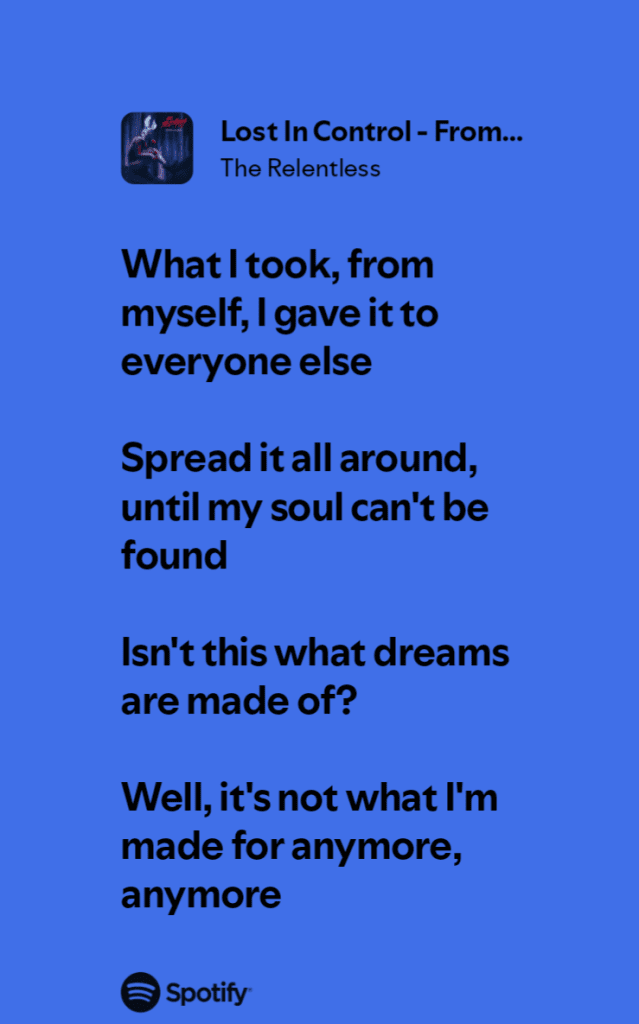
“What I took from myself
I gave it to everyone else
Spread it all around
Until my soul can’t be found
Isn’t this what
Dreams are made of?”

These lyrics paint a vivid picture of the price Johnny paid for his fame. I see it as a direct reference to the Faustian bargain he made. He sold pieces of his soul for success, distributing them to his fans, the industry, and perhaps even Lily. The bitterly ironic question at the end reminds me of how Johnny’s dream of rock stardom turned into a nightmare.
Reclaiming His Soul

The lines that follow hit me hard, knowing Johnny’s history:

“I will never be released if I am the whore
I will never find peace in a place of war”

To me, this is Johnny’s moment of clarity. He’s realizing that as long as he plays by the devil’s rules – being the “whore” for the industry and for Lily – he’ll never be free. The “place of war” could easily refer to the constant battles he’s faced, both internal and external, since making his deal.

A Bittersweet Goodbye

The second verse feels like a direct address to Lily:

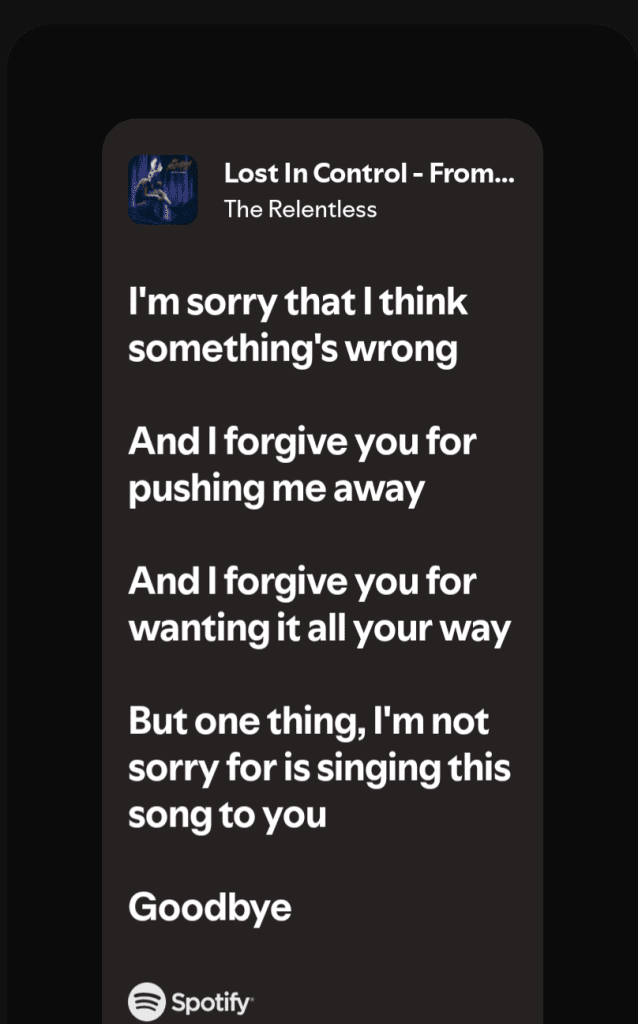
“I’m sorry that I don’t wanna ride along
I’m sorry that I think something’s wrong
And I forgive you for pushing me away
And I forgive you for wanting it all your way”

I interpret this as Johnny’s final words to Lily. He’s apologizing, not for his actions, but for finally seeing the truth of their relationship. The forgiveness he offers isn’t just for her benefit, but for his own – a way to let go of the resentment and move on.

The verse ends with what I see as the most powerful lines in the song:

“But one thing, I’m not sorry for
Is singing this song to you
Goodbye”

This, to me, is Johnny’s definitive statement. He’s not sorry for finally standing up for himself, for exposing the truth through his music. It’s his way of saying goodbye not just to Lily, but to the devil himself.
The Sound of Redemption

As I listened to “Lost in Control” in the context of Paradise City’s finale, I realized it’s more than just a breakup song or a rejection of fame. It’s Johnny Faust’s declaration of independence from the forces that have controlled him since American Satan.

The repeated chorus of letting go and losing interest in control isn’t about giving up. Rather, I see it as Johnny letting go of the toxic influences in his life – Lily, the devil’s bargain, the corrupting force of fame – and taking back control of his destiny.

In my previous analysis of Paradise City, I talked about how the show explores the blurred lines between good and evil, heaven and hell. “Lost in Control” feels like Johnny finally choosing a side – his own. It’s a rejection of the false paradise offered by the devil and embodied by Lily, in favor of an uncertain but authentic future.

I felt a sense of closure for Johnny’s arc. “Lost in Control” isn’t just a song; it’s a exorcism set to music. It’s Johnny Faust reclaiming his soul, one powerful lyric at a time. And as a fan who’s been on this hell of a ride from American Satan through Paradise City, I couldn’t think of a more fitting end to this dark, seductive saga of rock and roll damnation.

Watch and listen to the full song https://www.youtube.com/watch?v=kj1KdQi1gGs

About the Author

Next article

A Deep Dive into the Recurring Themes in Wes Craven’s Films

Editorials

6 min read

Wes Craven

I have always been fascinated by the works of Wes Craven. His films have not only shaped the genre but have also left a lasting impact on popular culture. Throughout his career, Craven consistently explored a range of recurring themes and motifs that have become synonymous with his unique style of storytelling. In this article, I will delve deeper into these themes and motifs, examining how they contribute to the enduring legacy of Wes Craven’s films.

Unraveling the Nightmares

One of the most prominent themes in Craven’s work is the blurring of the line between reality and fiction. This theme is perhaps best exemplified in his groundbreaking film, “A Nightmare on Elm Street.” The introduction of Freddy Krueger, a villain who terrorizes his victims in their dreams, effectively merges the realm of nightmares with the waking world. As a viewer, I found myself constantly questioning what was real and what was a dream, a feeling that added to the overall sense of unease and terror. Craven further explored this theme in “Wes Craven’s New Nightmare,” where the fictional horror of the “Nightmare” series begins to seep into the lives of the actors and crew involved in making the films. By blurring these boundaries, Craven forces both his characters and the audience to confront the power of imagination and the potential for fiction to impact reality.

Another recurring theme in Craven’s films is the nature of evil. In “The Last House on the Left,” Craven delves into the depths of human cruelty and the consequences of revenge. The film’s unflinching portrayal of violence and the subsequent vengeance enacted by the victims’ parents is a stark reminder of the darkness that can lurk within the human heart. Similarly, “The People Under the Stairs” tackles issues of greed, abuse, and societal inequality, personifying evil through the depraved landlords who terrorize their tenants. What I find particularly compelling about Craven’s exploration of evil is that he often blurs the line between the supernatural and the human. In the “Scream” series, for example, the killers are revealed to be ordinary people driven by complex motivations, rather than supernatural entities. This subversion of traditional horror tropes forces us to confront the idea that evil can take many forms and that monsters can be hiding in plain sight.

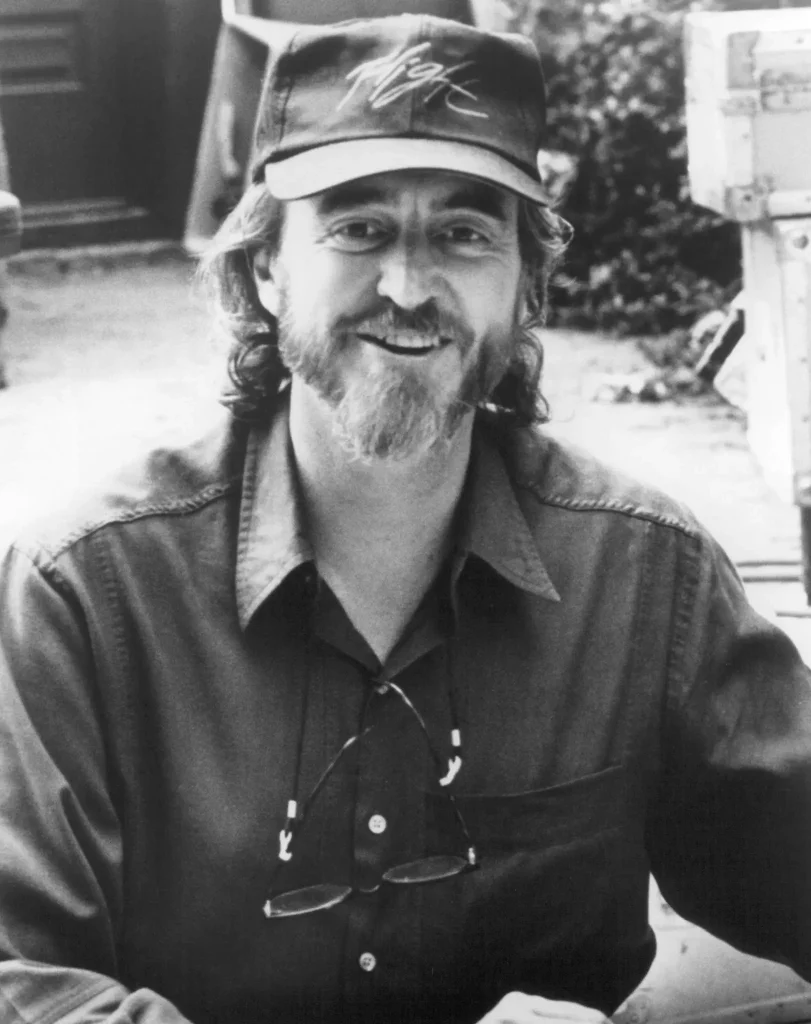
A picture taken of Wes Craven in 1991 showing him at a young age

Despite the darkness that permeates his films, Craven also consistently showcases the resilience of the human spirit. His protagonists, particularly the “final girls” like Nancy Thompson in “A Nightmare on Elm Street” and Sidney Prescott in the “Scream” series, demonstrate remarkable strength and resourcefulness in the face of unimaginable horror. As a viewer, I can’t help but root for these characters as they fight back against their tormentors and confront their own fears and traumas. Through their journeys, Craven reminds us of the power of perseverance and the ability of individuals to overcome even the most daunting challenges. These characters serve as a beacon of hope in a world filled with darkness and terror.

One of the things I admire most about Wes Craven is his ability to subvert and redefine horror tropes. In the “Scream” series, he deconstructs the slasher subgenre by having his characters openly discuss and analyze horror movie clichés. This meta-narrative approach not only adds a layer of self-awareness to the films but also serves as a commentary on the genre itself. By exposing the rules and conventions of horror movies, Craven invites the audience to engage with the material on a deeper level, challenging us to question our own expectations and assumptions. Similarly, in “The Serpent and the Rainbow,” Craven explores the concept of zombies through the lens of Haitian voodoo, offering a fresh take on a familiar monster. This willingness to push boundaries and challenge conventions has ensured that Craven’s films remain relevant and engaging, even years after their release.

As I reflect on the recurring themes and motifs in Wes Craven’s films, I can’t help but be struck by the profound impact his work has had on the horror genre and on me personally. His ability to blend the terrifying with the thought-provoking, to challenge our perceptions of reality and evil, and to celebrate the strength of the human spirit has cemented his status as a true master of horror. Craven’s films have not only entertained me but have also forced me to confront my own fears and question the world around me. Through his exploration of the blurred lines between reality and fiction, he has shown us the power of storytelling and the ways in which our imaginations can shape our experiences.

Moreover, Craven’s films have served as a catalyst for important conversations about the nature of fear, violence, and the human condition. By delving into the depths of human cruelty and the consequences of revenge, he has forced us to grapple with the darker aspects of our own nature. At the same time, his portrayal of resilient and resourceful protagonists has inspired countless viewers, myself included, to face our own challenges with courage and determination.

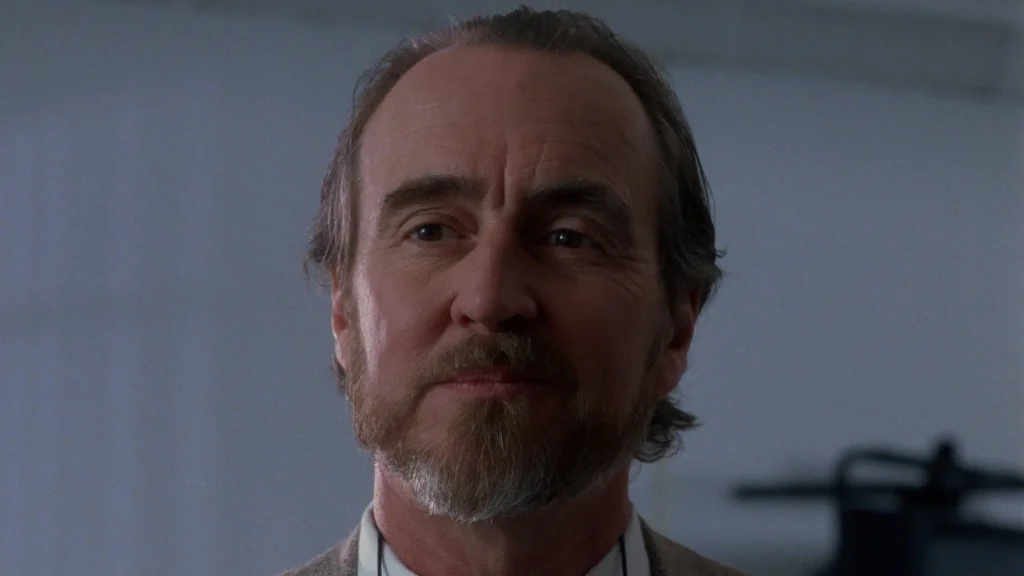
A Image of Wes Craven looking forward

It is also worth noting the impact that Wes Craven’s films have had on popular culture as a whole. His iconic characters, such as Freddy Krueger and Ghostface, have become household names, transcending the boundaries of horror fandom and becoming part of our collective cultural consciousness. The “Scream” series, in particular, has had a lasting impact on the horror genre, inspiring a new generation of self-aware and meta-fictional slasher films.

Craven’s influence can also be seen in the works of countless other filmmakers who have followed in his footsteps. His ability to blend horror with social commentary, to subvert genre tropes, and to create complex and memorable characters has set a standard for excellence in the field. As a result, his legacy continues to shape the horror landscape, inspiring new generations of filmmakers to push the boundaries of what is possible within the genre.

By exploring the blurred lines between reality and fiction, the nature of evil, the resilience of the human spirit, and subverting genre tropes, Craven has created a body of work that is both entertaining and profoundly meaningful. His films have not only shaped the horror genre but have also left an indelible mark on popular culture as a whole.

As a lifelong fan of his work, I am grateful for the ways in which his films have challenged, inspired, and entertained me over the years. Wes Craven’s legacy will continue to live on, inspiring new generations of filmmakers and audiences alike to explore the depths of the human experience through the lens of horror.

About the Author

Load next article A Deep Dive into the Recurring Themes in Wes Craven’s Films