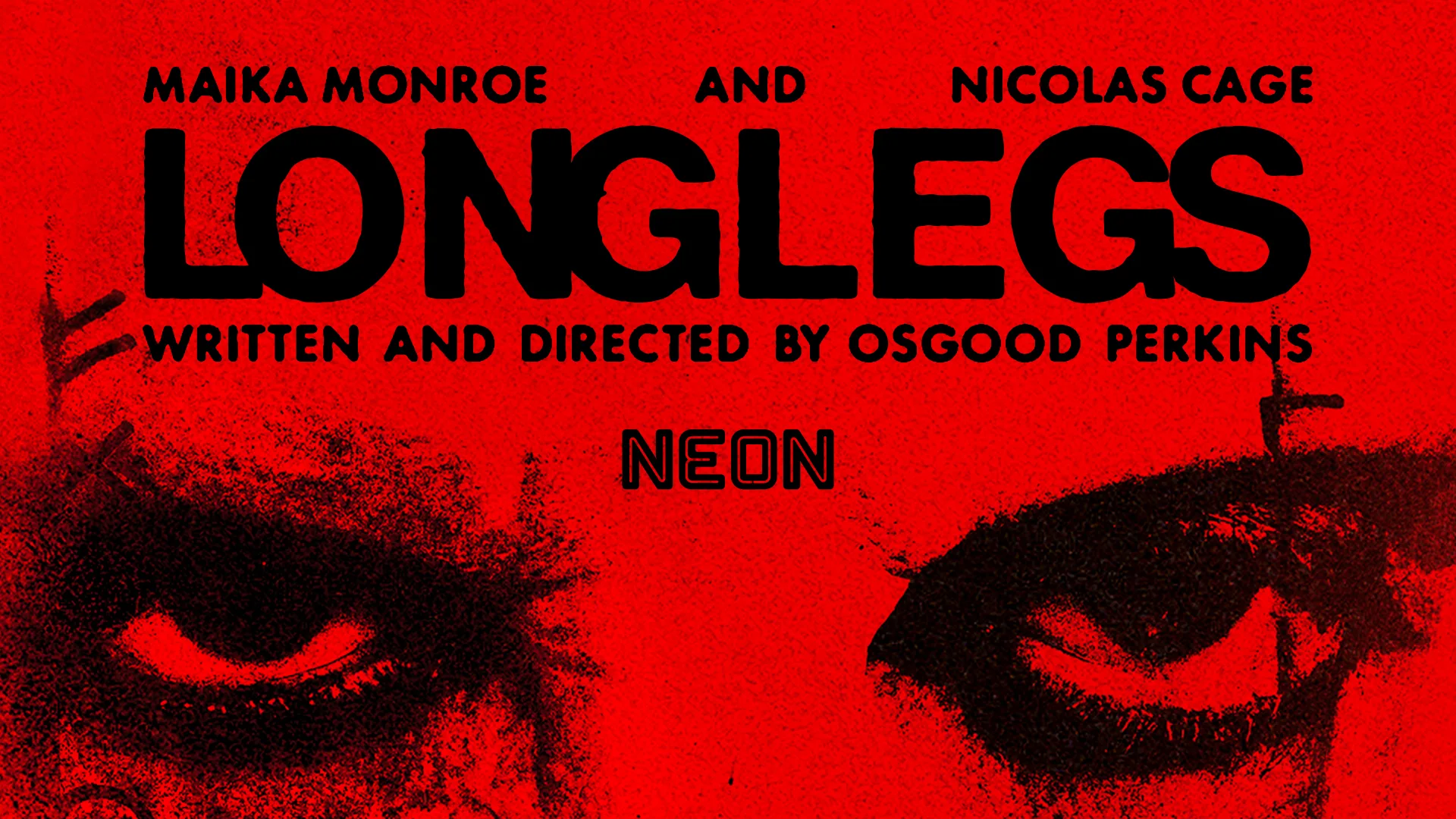
“Longlegs” isn’t your average horror film; it’s a slow-building nightmare that eats away at your soul. At the heart of it is the unsettling “cuckoo,” more than just a sound—it’s a warning. When Nicolas Cage, as Longlegs, hisses it out with his eerie, high-pitched voice, it feels like a declaration of war, announcing a breakdown of the family unit. Just as the cuckoo bird lays its egg in another’s nest, allowing its chick to outlive the host’s young, Longlegs uses the dolls—those empty, eerie porcelain figures— as his tools to invade and destroy families from the inside. The “cuckoo” he sings isn’t just alarming; it heralds a violation that leaves nothing but a void.
This film doesn’t rely on blood and guts; instead, it turns absence into a weapon, with the “cuckoo” call at its center. Longlegs isn’t just some random maniac—he’s a twisted craftsman, a follower of “Mr. Downstairs,” fixated on turning rural families into victims. His strategy? Cuckooing. He seeks out homes with daughters born on the 14th of any month, each birthday a part of his coded messages—those scrawled notes that Agent Lee Harker deciphers with growing horror. The “cuckoo” whispers he hears, sometimes recorded on old tapes or echoing in his mind, signal that an invasion is happening. Then come the dolls, sent through the mail or delivered by Ruth Harker, Lee’s own mother, who plays her part without knowing. They aren’t just meaningless objects; they are the real-life symbols of cuckooing, empty except for the mind of a victim, a grotesque mockery of life that spreads death. Placed in living rooms or nurseries, they’re set to unleash fear, turning fathers into killers and mothers into silent shells, while the birthday girl becomes the offering.
The connection is raw: “cuckoo” signifies the action itself. Just like a cuckoo bird’s egg mimics that of its host, fooling the parents until it’s too late, Longlegs’ dolls also blend seamlessly into the family environment until their true nature takes over. That haunting “cuckoo” he sings—sometimes a giggle, sometimes a growl—serves as a warning, a signal that he’s crossed into the family’s space. The doll becomes the physical evidence of cuckooing: a hollow gaze staring back, not just killing but replacing, stealing away safety, sanity, and soul. It’s not what’s inside the doll that’s frightening; it’s what’s missing—no warmth, no humanity, just an empty shell that spreads decay, driving the family into despair. Longlegs doesn’t barge in; he cuckoos them, slowly and carefully, leaving a devastated nest.
The rural backdrop amplifies the horror. These secluded homes—wooden porches, faded curtains, Bibles on the nightstand—seem safe, like havens of small-town tranquility. But Longlegs turns them into his playground, and the “cuckoo” call destroys that peace. Imagine him lurking in the shadows, pale and greasy, singing that word as he watches his dolls do their work. The birthday murders tied to quiet calendar dates twist celebrations into horror, with the dolls at the center—silent, vacant, wrong. They’re not trophies; they are the instruments of cuckooing, left behind to rot the family from the inside. The “cuckoo” sound lingers in the air, but the doll makes it real, anchoring the invasion in something tangible, something to fear.
Agent Lee Harker bears the brunt of it. Maika Monroe portrays her as a troubled seeker, piecing together Longlegs’ clues while her own past unravels. That “cuckoo” isn’t just a hint; it’s deeply personal. Her mother, Ruth, unknowingly played the role of his courier, delivering those dolls under the guise of holiness—what’s more deceptive than that? The film’s shocking climax, with Ruth shooting a girl in a misguided attempt to “save” her from the doll’s curse, reflects the aftermath of cuckooing: the host harming its own to protect the invader. For Harker, every “cuckoo” she hears—on tape, in memories, in her nightmares—connects back to those dolls, staring at her as if warning her about her own cuckooed existence. They aren’t merely proof; they are reflections of her terror, reminders that her family nest was invaded long ago, leaving her feeling just as hollow.
“Longlegs” understands that true horror isn’t about blood—it’s about the absence of love. When Longlegs whispers “cuckoo,” he’s not just teasing; he’s naming his craft. Cuckooing is his art, and those dolls are his creations—hollow shells that penetrate the family unit, corrupting and erasing it under the illusion of innocence. He’s a dark puppeteer, a birthday-obsessed character who turns homes into graves, and that “cuckoo” is his calling card, signaling the beginning of the takeover. The dolls complete the cycle, standing as reminders of what’s lost, proof that the nest has been destroyed. For Harker, for the families, for all of us, “cuckoo” is not just a word; it signifies violation, emptiness, and the possibility that everything dear to you can be stolen and replaced by a void. This isn’t merely a film—it’s a deep cry into the darkness, with Longlegs’ “cuckoo” and those cursed dolls serving as echoes that refuse to fade.