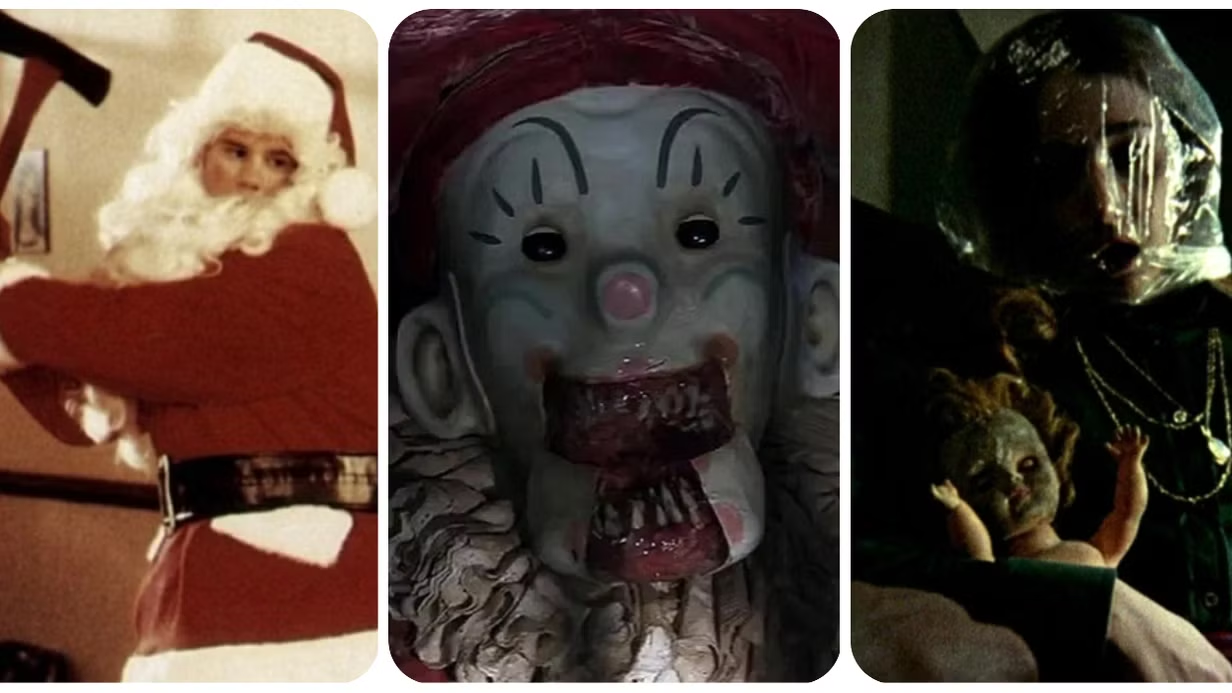
Christmas Villains: Holiday Horror Icons

Revisit

2 min read

Updated August 2026: Holiday villains never retire — Krampus leads our Christmas horror picks.

The holiday season is often associated with joy, giving, and warmth. However, some iconic Christmas villains have etched themselves into our collective nightmares, forever changing the way we think about the most wonderful time of the year. In this article, we’ll delve into the most memorable Christmas villains that make the holiday season a horror show.

1. Krampus (Krampus, 2015)

The half-goat, half-demon creature from Austrian folklore punishes naughty children during the Christmas season. This terrifying entity has become a modern holiday horror icon.

2. Billy (Silent Night, Deadly Night, 1984)

After witnessing his parents’ brutal murder on Christmas Eve, Billy grows up to become a killer Santa, spreading terror and bloodshed.

3. The Abominable Snowman (Rudolph the Red-Nosed Reindeer, 1964)

This terrifying yeti may seem like a children’s character, but its fearsome appearance and menacing demeanor make it a holiday horror staple.

4. The Ghost of Christmas Past (A Christmas Carol, various adaptations)

While not inherently evil, this specter’s haunting presence and ability to reveal past traumas make it a chilling figure.

5. Harry Stadling (Silent Night, Deadly Night Part 2, 1987)

Billy’s brother, Harry, continues the family tradition of holiday horror, donning the infamous Santa suit to wreak havoc.

6. The Elves (Rare Exports: A Christmas Tale, 2010)

These sinister, child-abducting elves turn the idea of Santa’s workshop into a twisted nightmare.

The Abominable Snowman (Rudolph the Red-Nosed Reindeer, 1964)

7. Jack Frost (Jack Frost, 1997)

A serial killer’s spirit possesses a snowman, creating a deadly winter wonderland.

8. The Yule Lads (Grímur Hoffmann’s Icelandic Folklore)

These 13 mischievous entities, each with unique tortures, haunt children over the 13 nights leading up to Christmas.

9. Sinterklaas (Sint, 2010)

A dark, zombie-like version of Saint Nicholas brings terror to Amsterdam, punishing naughty children.

10. The Christmas Devil (To All a Goodnight, 1980)

A mysterious killer, dressed as Santa, stalks and murders college students during a holiday party.

Honorable Mentions:

  • The Ice Queen (The Snow Queen, 2012)
  • Mr. Simpkins (The Nightmare Before Christmas, 1993)
  • Grandfather (Tales from the Crypt, 1972)

What makes these holiday horror icons so terrifying?

  • Twisted Traditions: Subverting beloved holiday figures and folklore creates unease.
  • Seasonal Setting: The contrast between joyous holidays and horror heightens tension.
  • Psychological Trauma: Exploring the darker aspects of human nature resonates with audiences.

Share your favorite holiday horror icons in the comments!

About the Author

Next article

The Dark Side of Giving: Unwrapping the Sociological Significance of Christmas Horror

Horror Facts Original

2 min read

The Dark Side of Giving

Christmas horror movies often get dismissed as guilty pleasures or campy fun, but beneath their gruesome surfaces, many offer scathing commentary on consumerism and societal expectations. Let’s dive into the darker side of giving and explore how Christmas horror reflects our culture’s flaws.

Consumerism’s Dark Mirror

Christmas horror frequently critiques the commercialization of the holiday season. Films like “Rare Exports: A Christmas Tale” (2010) and “Krampus” (2015) portray a world where gift-giving has become an obsessive, destructive force. These narratives serve as cautionary tales about the consequences of prioritizing materialism over meaningful connections.

In “Black Christmas” (1974), the iconic sorority house slasher, the protagonists’ focus on presents and parties blinds them to the evil lurking among them. This subtle commentary on distraction and complacency highlights how consumerism can desensitize us to the world’s darker realities.

Christmas horror often subverts traditional holiday symbols, transforming them into instruments of terror. Think killer Santas, demonic elves, or malevolent snowmen. This perversion of iconic imagery critiques how consumer culture co-opts and corrupts cultural heritage.

“Silent Night, Deadly Night” (1984) is a prime example, where a traumatized Billy becomes a murderous Santa, exemplifying how societal expectations can warp individual psyche. This film’s exploration of trauma, mental health, and societal pressure resonates with audiences seeking more nuanced storytelling.

The Dark Side of Giving

Christmas horror movies frequently explore the tension between individuality and societal conformity. “To All a Goodnight” (1980) and “Christmas Evil” (1980) feature protagonists struggling to cope with the pressures of holiday expectations.

These narratives illustrate how societal norms can suffocate personal identity, leading to feelings of isolation and desperation. By amplifying these anxieties through horror, filmmakers shed light on the darker aspects of holiday culture.

The Gift of Social Commentary

Christmas horror movies offer more than just frightful entertainment; they provide a lens through which to examine our cultural values. By analyzing these films, we gain insight into:

  1. The exploitation of emotions: How consumerism manipulates our emotions to drive sales.
  2. The erosion of tradition: How commercialization dilutes cultural heritage.
  3. The pressure to conform: How societal expectations stifle individuality.

In conclusion, Christmas horror movies serve as a reflection of our society’s flaws, offering commentary on consumerism, conformity, and cultural commodification. By embracing the darker side of giving, we can gain a deeper understanding of ourselves and the world around us.

So, this holiday season, indulge in some Christmas horror – not just for the thrills, but for the thought-provoking commentary on the world we live in.

About the Author

Load next article The Dark Side of Giving: Unwrapping the Sociological Significance of Christmas Horror