Another List Of Horror Creators!

Horror Facts Original

13 min read

Happy September, everyone. As some of you may know, a year ago, I posted a list of horror creator recommendations, and I’ve decided to create another, because they got me through a tough period from about early to mid-July to early August. There I was, stranded on a deserted island surrounded by irradiated piranhas. The only thing I had to eat was expired packaged rice cakes and water. My phone had died on me, so I had to rely on my backup for entertainment. Luckily, I had the foresight to compile a bunch of E-books as well as stories from Substack onto it. 

Thanks to them, I held on long enough to have the strength to flag down a passing pirate ship (which turned out to be full of ghosts and we had to fight a kraken and a sea serpent), but they got me home safe. Then I finally got a new phone, and all became right with the world. Okay, I’ll admit I may be embellishing things just a tad. Long story short, I like some kind of stimulation when I am out walking, and I prefer books in audio format, so I used Evie, which is a text reading app. Obviously,  I would much rather listen to an actual person, but it’s customizable, which makes it a lot less grating to listen to compared to other apps, even if it does sometimes mispronounce words. 

Thanks to this, I was able to listen to the works of various indie authors who kept me entertained when I was out during some of the longest few weeks I’ve had in a while. To show my gratitude, I’m going to be including them in a list. Now, this isn’t going to be in any particular order, and it won’t just include them. I’m also putting in people whom I feel should be boosted. Also, this won’t include anyone I have talked about in my previous list. 

Lastly, I’m going to be keeping this to ten again because let’s face it. This is a super easy way to fill my one article a month quota, so why not save some other names for a rainy day? Oh yeah, and if you decide to check out any books I mention, be sure to leave a review. Even if it’s a short one, it massively helps boost indie writers.  Anyway, enough stalling, let’s get into it. 

  1. Nikki (aka Nocturnal Narrator): This woman is the embodiment of “Takes Zero Shit”. Low key and don’t tell her I said this, but she kind of scares me. She has a unique style of storytelling that feels clinical while still carrying a lot of emotional weight. I 

I know that sounds almost contradictory, but she manages to pull it off.  If you want to see what I mean, check out her Ben and Olivia series.  

I’ve also gone through some of her more sci-fi work. It’s a doozy and in transcript style, which I always love. You can find both in her Substack publication here. If you want to follow her outside of Substack, she also has a BlueSky. 

  1. Andy Futuro: Speaking of sci-fi, his name is always the first one I think of when it comes to the genre on Substack, especially sci-fi horror. Something that his work has in common with Nikki’s is that both have stories that feel like looking into a mirror. There’s no narrative, no agenda, just a cold, uncomfortable truth you’re forced to confront. If I had to protect whose stories convey this more effectively, gun to my head, I’d have to go with Andy (Nikki, please don’t kill me).  If you want to read Andy’s work, you can find it on Substack here. 
  1. Travis Knight: Huge shoutout to this guy. He’s always liking and restacking my stuff. He’s versatile in his storytelling. His series Moonium is dripping with eeriness, and his Bingo Killer series has it all. There’s mystery, horror, an implied romance, and just enough comedy so that it doesn’t detract from the tone of the story. If you like that sound of that, check out his Substack here. If you want to read the Bingo Killer all at once, you can find it on Amazon. 
  1. Matt Mason: I feel bad because I meant to write an article about his Salmonweird books while they were still fresh in my mind. Hopefully, I’ll get around to it before the holidays are over. I don’t want to give too much away, but they consist of a supernatural crime comedy series about a retired detective living in a town full of ghosts. In each story, someone is murdered, usually one of the ghosts (Just go with it. Trust me), and it’s up to our protagonist to bring whoever or whatever is responsible to justice, with some help from his friends, of course. If you want to check them out, you can find them on his website here. 

If you want to follow him on social media, check out his BlueSky.  He’s an alternating host of the Horror Writers’ Chat, which is a ton of fun and hosted each Wednesday. If you decide to participate, don’t forget to include the tag #HorrorWritersChat in your posts and no using the tag for self-promotion unless you responded to all the questions that day and only under the appropriate post.  If you can follow those simple rules, I’m sure you’ll have a great time. 

  1. Will Soto: I’ve listened to a lot of horror narrators over the years. Each one covers stories in their own unique way. However, there are few who I feel manage to capture that classic Creepypasta atmosphere. One of the people who manages to do this is Will through his podcast, The Red Treehouse. On it, he hosts a variety of topics sure to as he says “Keep you up at night.”

Not only does he read online horror stories (and has gotten into writing his own, and I’m pretty sure he’s working on a novel), he also covers classics such as Frankenstein or The Most Dangerous Game. He also talks about true paranormal events, including ones that tie into true crime events. I don’t really enjoy that sort of stuff because it makes me angry, but he always addresses it tactfully and sensitively. If you like what I’ve described about him, be sure to give him your support, as his podcast is still fairly new, and I would love to see it get the recognition it deserves.  It’s available on Apple, Spotify, and YouTube. 

I listen to it on the second one, so I’ll link it here. If you want to keep up with The Red Treehouse on social media, you can find its Threads (and by extension, Instagram) account here. 

  1. Uncovering Dark Falls: Okay, so when I say this podcast is new, I mean brand new. We’re talking, there are only five episodes as of me writing this. Here’s what it’s about. Did you like Goosebumps growing up? Do you remember being under the covers with a flashlight shining down on the pages of Stay Out Of The Basement or Monster Blood? 

Do you remember being unable to take your eyes off your TV when the Goosebumps show came on? If you answered yes to either of these, this is the podcast for you. The short of it is it recaps Goosebumps stories by making them in-universe events. In the context of the podcast, everything is set in the town of Dark Falls (which is the town from Welcome To Dead House, the first Goosebumps book). Gideon Brooks, the host, details his investigation of these events throughout each episode. This is a fantastic premise, and I hope it catches on. 

Do you remember being unable to take your eyes off your TV when the Goosebumps show came on? If you answered yes to either of these, this is the podcast for you. The short of it is it recaps Goosebumps stories by making them in-universe events. In the context of the podcast, everything is set in the town of Dark Falls (which is the town from Welcome To Dead House, the first Goosebumps book). Gideon Brooks, the host, details his investigation of these events throughout each episode. This is a fantastic premise, and these events are investigated by a man named Gideon Brooks. I hope it catches on. 

Also, one of the people who works on it commissioned yours truly to write one of the episodes. I’m not giving any hints, because if you’re at all familiar with Goosebumps, you’ll probably know which story I picked right away, but I hope you enjoy it when it comes out. I know you can find it on Apple, Spotify, or YouTube. I’ll link it here. You can also find them on Threads, and their account is fun. It’s in character, but also a bit tongue-in-cheek at times. You can find it here. 

  1. Grace Anderson: If you recall, I wrote an article about her book, The Thing In The Basement, which you can find here. What I like about her stories is that they aren’t just horror. They tend to have a dark fairy tale vibe. There’s always this sinister background force at work. I also enjoy that her writing feels very minimalist at times. 

 Don’t get me wrong. Sometimes, long descriptions are necessary. However, it’s a nice change of pace to come across stories that are able to convey a lot of emotion and information with fewer words. She does that extremely well and deserves more recognition for it.  

Her Substack publication includes a mix of fictional and nonfictional horror posts that are sure to entertain you or give you some fruit for thought. Her profile includes links to her Instagram, TikTok, YouTube, and author site. You can find it here. She also has an Amazon page, which you can find here.   

If you don’t want to support Amazon, don’t worry. She has alternative means of purchasing her paid stories on her website. Be sure to give your support. 

  1. Cassandra L. Thompson: A witch! Actually, she’s a part of WitchTok, which (see what I did there?) might end up exclusively becoming WitchGram soon if TikTok goes dark again permanently.  She’s another person who inspired one of my articles. In her case, I wrote one about her novel, Welcome To Meadowbrook (one of the most mind fuck stories I’ve read by the way). You can find my thoughts on it as well as I link to it here.  She’s a skilled gothic writer and is very good at creating atmosphere. 

Keep in mind, she’s also managing her own publishing site on top of this.  If you want to follow her on social media, you can find her Threads account here. As for her publishing site, you can find it here. 

  1.  Gil Nobodi: This dude has some of the best body horror I’ve come across with his Priests Of 2122 series. I usually don’t have visceral reactions when it comes to writing, but this made me cringe. I don’t want to give a lot away, but it involves a transformation of sorts. Let’s say that’s not your bag. He has other series you may enjoy, like Microhell, a satire torture series, The Crooked Snake, which is like horror possession, I think? Divine Intervention, which is high fantasy, and Homunculi, a sci-fi with magical elements at its core. 

If you want to know more about these stories, you can find them on his publication’s about me page linked here. If you want to follow him on Substack, I’ll link it here. 

  1. Victor Sweetser: Before I joined The Shadow Box Archives, I had been posting to r/NoSleep for five years and r/Odd_directions for three years. Then I find out Reddit basically stabbed their users in the back with this AI shit. Therefore, I sought out somewhere else to post my stories and made a post explaining this on r/NoSleepOOC. Someone mentions SBA, and then I get a DM from Victor sending me an invite to join the Discord and to become a featured writer for the Patreon.  He does a lot of work on Patreon and now Substack, since we got one set up now, which I’ll link here. 

Unlike the Patreon, the publication is open for anyone to post there so long as they have contributor status. Keep in mind, this is meant to be entirely free, meaning don’t join under the assumption of getting payment from it. Also, make sure you read the rules first. If you want to know more information, check the about page here. Okay, as for Victor’s stories, they get intense in an extremely bizarre way. His Haunted House series, which you can find here, is about some adults having to deal with traps in a haunted house they set up when they were kids that became real through supernatural means. 

His Submechanophobia story results in a woman giving birth to an animatronic baby. It’s crazy stuff. If you want to follow him, you can find him on BlueSky here and Substack here. Be sure to give your support. 

Also, since it’s worth repeating, make sure you do the same thing for all these people, because God damn it, indie creators work hard as hell and deserve to be compensated for it.  

Well, that’s it for this article. If any of my fellow creators who read this don’t see their name mentioned, don’t worry. You’ll likely end up on the next list. Anyway, I hope you all enjoyed this list. Next time, I’ll have a proper article. Thanks, and happy reading 

If you want to support me, check out my Reddit’s pinned posts linked here (one of them has my tipping links) or join the writing Patreon I am a part of, linked here, where we post horror stories. Thanks, and happy reading.

About the Author

Next article

The Warrens’ Legacy: Belief Critiqued

Horror Facts Original

17 min read

warrens

The Unholy Alliance of Myth and Money

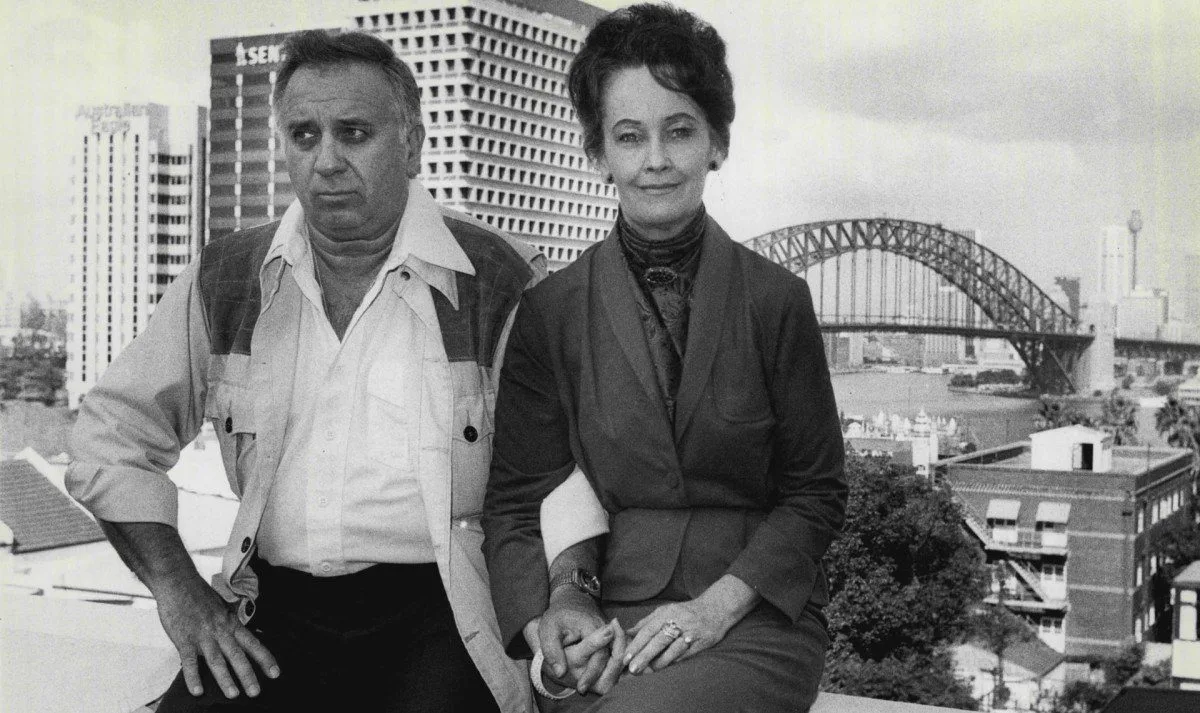
Let’s get one thing straight: the names Ed and Lorraine Warren are now cultural bedrock, permanently etched into the global psyche. They aren’t just figures from a few dusty case files; they’re the architects of a modern mythos, a ghost-hunting power couple whose work was as much a spiritual crusade as it was a shrewd business venture. The New England Society for Psychic Research (NESPR), which they founded in 1952, was touted as the oldest ghost-hunting organization in the region, a claim that helped establish their credentials from the jump.1 Ed, a self-proclaimed demonologist, and Lorraine, a self-described clairvoyant, positioned themselves as devoutly Catholic heroes locked in a never-ending spiritual war against a world of malevolent entities.1 They weren’t just investigating; they were fighting evil, one case at a time, for the sake of innocent families.4

This isn’t a fan letter; it’s a deep dive. This report rips back the curtain on the sensational stories to reveal a complex history built on belief, skepticism, and a genius for public relations. Their case files, once the fodder of local tabloids, have since been transformed into a globally recognized cinematic universe that’s grossed billions.5 This transformation begs a crucial question: How did a handful of controversial case files become the foundation of a modern media empire?

The timing of their rise was anything but coincidental. The 1970s exploded with a fascination for the occult, largely thanks to the monster success of the novel and film The Exorcist.8 Suddenly, the public had a ravenous appetite for “real-life” horror. The Warrens, with their established brand, stepped into the spotlight and delivered. They offered a narrative that spoke directly to a world hungry for tales of spiritual evil, framing demonic possession as a tangible threat and a grim warning for a secular society. They were masters of media engagement, turning press conferences and book deals into a feedback loop that solidified their status as paranormal authorities.9 The Warrens weren’t just lucky; they were commercially savvy, strategically capitalizing on a burgeoning market for a very specific kind of ghost story.

The Battle for the Narrative: The Smurl Haunting and Its Cinematic Retelling

The Smurl Case: A Deep Dive into a Troubled History

The alleged haunting of the Smurl family in West Pittston, Pennsylvania, provides a perfect case study for understanding the deep criticisms leveled against the Warrens and their methods. The Smurls—Jack, Janet, their four daughters, and Jack’s parents—claimed to be at the mercy of supernatural forces between 1974 and 1989.17 Their ordeal allegedly began with minor phenomena like doors opening on their own and foul odors, but it quickly escalated to a terrifying ordeal.15 The family claimed they were tormented by physical and sexual assaults by an unseen entity, with incidents including their 75-pound German shepherd being thrown against a wall and a daughter being pushed down a flight of stairs.17 Jack Smurl also claimed a succubus entered the living room and raped him while a baseball game played on the TV.19

The Warrens were called to investigate in 1986, where they concluded the family was being tormented by four entities: a harmless elderly woman, a young, violent girl, a man who had died on the property, and a “very powerful” demon that used the other spirits to terrify the family.17 According to Ed Warren, the demon targeted the Smurls because they were “The Chosen,” meaning people who were specifically picked by demons to be haunted.20

Updated August 2026: The Warrens’ real case files — read The Conjuring true story and the Enfield poltergeist investigation.

The sensational claims were met with immediate skepticism. Professor Paul Kurtz, chairman of the Committee for the Scientific Investigation of Claims of the Paranormal (CSICOP), labeled the story a “hoax, a charade, a ghost story”.11 Kurtz also pointed to a less dramatic, more grounded explanation: Jack Smurl’s medical history.9 Jack had undergone brain surgery in 1983 to remove fluid, a procedure linked to a past bout with meningitis that left him with “short-term memory loss” and other “cognitive impairments”.11 Psychologists noted that people often turn to demonology as an explanation for the tensions in their lives.17 The Smurl family’s decision to decline a recommendation from Kurtz that they undergo psychiatric exams only fueled the suspicions of a hoax.9 Moreover, a priest who spent two nights at the house reported that “nothing unusual happened” during his stay, and when the Smurls moved out in 1988, the next tenant stated she “never encountered anything supernatural while living there”.17

Despite claiming to be exhausted and tired of the constant media bombardment, the Smurl family, along with the Warrens and journalist Robert Curran, co-authored a paperback book version of their story titled The Haunted just months after the media circus began.17 The book was criticized by reviewers for being one-sided and poorly written.17

The Hollywood Treatment: The Conjuring: Last Rites

As the final mainline installment of the Conjuring franchise, The Conjuring: Last Rites is based on the alleged Smurl haunting.15 The film centers on the family in a fictionalized version of West Pittston, Pennsylvania.15 However, the film is not a documentary but a piece of entertainment that “blend[s] fact with horror storytelling”.8 A director noted that the creative priority was to give the fictional Ed and Lorraine Warren a “proper series sendoff”.8

This dramatic re-telling takes significant liberties with the real case by adding fictional elements for heightened terror.16 For example, the film introduces a cursed mirror that follows the family and is connected to a previous Warrens’ investigation from 1964.24 In the film, a light fixture falls on a daughter, another vomits shards of glass and blood, and a character named Father Gordon dies by suicide after being attacked by a demon, none of which happened in the real case.24 The film also features the Warrens’ daughter, Judy, as a psychic who helps conclude the case, a plot point that has no basis in the real-life haunting.17

A Pattern of Controversy: Other Case Files

The Warrens’ rise to international fame was built upon a handful of other high-profile cases, many of which have been heavily disputed or outright debunked.

  • Annabelle: The story of the Raggedy Ann doll, which the Warrens claimed was manipulated by an “inhuman presence,” served as a foundational narrative for their brand.1 However, the account was reportedly “refuted by eyewitnesses, investigations and forensic evidence”.1 The true nature of the events remains a subject of debate, but the Warrens’ sensationalized narrative is the one that has endured.
  • The Amityville Horror: This case is arguably the most famous example of a Warrens-endorsed haunting that has been widely discredited. While the Warrens “defended [the story] as genuine for many years,” a lawyer named William Weber confessed in 1979 that he, author Jay Anson, and the occupants of the home “invented the horror story over many bottles of wine”.1 Further debunking came from forensic investigations that found no evidence for claims such as cloven hoof prints in the snow, as no snow had fallen on the night in question.12
  • The Enfield Poltergeist: The cinematic portrayal of this case suggests the Warrens played a central role, but critics and a parapsychologist who investigated the events alongside the Warrens, Guy Lyon Playfair, claim they were involved “to a far lesser degree than portrayed in the movie”.1 Playfair stated that the couple “turned up once” uninvited and were even refused admittance to the home.1 He also claims that Ed Warren saw the case as a potential financial windfall, telling him “the Warrens could make a lot of money…out of the case”.1
  • The Snedeker Case: The Snedeker family haunting, a story about a former funeral home infested with demons, provides a definitive point of fact in the debate over the Warrens’ credibility. Horror author Ray Garton, who wrote the account of the case, publicly questioned the veracity of his own book.1 He stated that the family, who were dealing with serious problems like alcoholism and drug addiction, “couldn’t agree” on the details of the story, forcing him to invent dialogue and fictionalize the narrative to create a cohesive account.1 Garton’s admission serves as a powerful refutation of the Warrens’ claim that the Snedeker case was a “true story” and provides a clear example of how their “investigations” were, at times, based on fabricated accounts.

The Warrens’ Methodology and the Skeptical Counterpoint

The Warrens’ approach to paranormal investigation, as described in their own accounts and by others, relied heavily on subjective and non-empirical methods. A central component was Lorraine’s self-professed clairvoyance, a psychic ability she used to perceive spiritual presences and assess the nature of a haunting.2 For the Warrens, her “readings” were a form of evidence in and of themselves. Their organization, the New England Society for Psychic Research (NESPR), is characterized by critics as a “research” body in name only, as its methods were not those of genuine scientific inquiry.14

According to skeptical investigators who examined their work, the Warrens’ process was driven by a “predetermined conclusion which they adhere to, literally and religiously”.1 When confronted with a case, their immediate assumption was that the activity was of a demonic nature. Lorraine Warren herself articulated this worldview, stating that skeptics like Perry DeAngelis and Steven Novella failed to understand their work because “they don’t base anything on a God”.1 This statement reveals a fundamental conflict: the Warrens’ methodology was not a dispassionate search for truth but an effort to reinforce a specific spiritual and religious worldview.

The current iteration of the NESPR, now led by their son-in-law Tony Spera and daughter Judy Spera, continues this legacy, maintaining the Warrens’ faith-based approach to paranormal research.13 This perpetuation of a non-scientific methodology underscores the fundamental incompatibility between the Warrens’ brand of spiritual inquiry and the principles of empirical evidence.

A significant challenge to the Warrens’ credibility comes from the detailed investigations of scientific skeptics. In 1997, the New England Skeptical Society (NESS), led by Perry DeAngelis and Steven Novella, examined the Warrens’ evidence and concluded that it was “all blarney”.1 Their analysis, based on a tour of the Warrens’ museum and a review of their evidence, revealed a consistent pattern of misinterpretation and a failure to consider alternative explanations.

The NESS provided a structured refutation of the Warrens’ purported physical evidence. They found that the couple’s photographic “proof” consisted largely of light anomalies and hazy blobs that were easily explained by common photographic artifacts. These include “flashback” (the reflection of a camera flash on the lens), light diffraction, and the “camera cord effect,” where a camera cord or strap reflects the flash, creating the appearance of a ghostly apparition.1 The NESS was able to reproduce these effects, demonstrating a clear and repeatable natural explanation for the Warrens’ alleged “ghosts”.14

Similarly, a video the Warrens claimed showed a man “dematerializing” was analyzed by a professional video company and found to be a simple “wipe” effect, created by stopping and resuming the camcorder’s recording.14 The NESS concluded that the Warrens and similar groups support a pseudoscience that begins with an a priori assumption of the paranormal and dismisses all naturalistic explanations without genuine investigation.14

The Challenge of Anecdotal Evidence

Beyond the photographic and video evidence, the vast majority of the Warrens’ work was supported by eyewitness testimony and personal stories. They were known to be captivating storytellers who had a “ton of fish stories about evidence that got away”.1 While compelling from a narrative perspective, such accounts are not considered reliable by the scientific community.

The unreliability of anecdotal evidence stems from the fallibility of human memory and perception. A scientific counter-explanation for many paranormal experiences is the phenomenon of hypnagogia, a state of consciousness that occurs during the transition from wakefulness to sleep.14 Hypnagogic hallucinations can include feelings of pressure on the chest and body paralysis, which some individuals might interpret as a demonic attack or sexual assault.14 This was offered as a possible explanation for some of Jack Smurl’s claims, a phenomenon Ed Warren appeared to be unaware of at the time.14 The reliance on stories, rather than on independently verifiable facts, exposes a key weakness in the Warrens’ methodology and demonstrates a preference for a compelling narrative over a factual one.

From Case File to Cinematic Universe

The Business of Haunting

The most significant component of the Warrens’ legacy is their transformation from local tabloid figures into the foundation of a media juggernaut. This shift was fueled by the multi-billion dollar success of The Conjuring universe. The franchise has grossed a combined $2.5 billion against a total budget of $263 million, establishing itself as the highest-grossing horror franchise in history.5 The staggering financial figures provide a compelling case for the causal link between the Warrens’ storytelling and their enduring cultural status. The following table illustrates the financial performance of key films in the franchise.

FilmProduction BudgetDomestic GrossWorldwide Gross
The Conjuring$20,000,000$137,400,141$319,494,638
Annabelle$6,500,000$84,273,813$257,047,661
The Conjuring 2$40,000,000$102,470,008$321,370,008
Annabelle: Creation$15,000,000$102,092,201$306,592,201
The Nun$22,000,000$117,450,119$366,050,119

The Conjuring Universe as a Myth-Making Machine

The films are not documentaries but a carefully crafted narrative designed to elevate the Warrens’ status as heroic spiritual warriors. A producer for the films has acknowledged that they “blend fact with horror storytelling,” and a director noted that their priority was to give the fictional Warrens a “proper series sendoff”.15 This means that the cinematic universe selectively uses and reframes the Warrens’ cases, often exaggerating their involvement or creating entirely fictional plot points.1 For example, the films portray them as the central figures in the Enfield case, despite the documented fact that their role was minor and uninvited.1 This artistic license transforms the Warrens from controversial investigators into beloved pop culture icons.4

The financial success of this cinematic narrative has created a powerful feedback loop. The profitability of the films provides the resources to produce more, which in turn introduces their “true stories” to a new, broader audience. This audience is often more receptive to the heroic, polished narrative presented on screen than to the debunking literature.5 The Warrens, therefore, win the public relations battle, and their legacy becomes defined not by the scientific community but by the entertainment industry. The truth becomes secondary to the franchise’s profitability.

Legacy, Allegations, and Enduring Questions

Contradictions of Character

The Warrens’ public image as a devoutly religious and pious Catholic couple is starkly contradicted by serious personal allegations. In 2017, Judith Penney accused Ed Warren of a 40-year sexual relationship that began when she was a minor, at age 15.1 Penney further claimed that when she became pregnant, Lorraine Warren persuaded her to have an abortion, arguing that a public scandal could “ruin the Warrens’ business”.1

These claims stand in direct opposition to the Warrens’ carefully curated image. Further supporting the contention that they were image-conscious, Lorraine had a contractual clause written into her film deal with New Line Cinema stipulating that she and Ed could not be shown “engaging in crimes, including sex with minors… or sexual assault”.1 This contractual demand reveals that the Warrens’ brand was not founded on objective truth but on a carefully managed, commercially viable narrative, and that their public relations strategy required them to actively prevent the public from learning about damaging information.

The “Transcendental Temptation”

The persistence of belief in the paranormal, despite overwhelming debunking evidence, can be understood through the philosophical concept of the “transcendental temptation,” coined by Paul Kurtz.3 This idea suggests that humans have a natural inclination toward “magical thinking” and supernatural explanations for the unexplainable. The Warrens masterfully capitalized on this temptation by offering simple, spiritual explanations (demons) for complex, often tragic human problems that may have had medical, psychological, or socioeconomic roots.8 Horror author Grady Hendrix noted that the Warrens, with “no training and no clinical background,” would “tell you it’s a demon, and walk away with book and movie contracts,” providing a convenient explanation that bypassed more difficult, and less profitable, truths.8

An Enduring Influence

Despite the widespread criticism and allegations, the Warrens’ influence on modern pop culture is undeniable. Their stories have become a staple of the horror genre, influencing ghost-hunting culture and introducing the concept of “spiritual warfare” to a new generation of filmmakers and audiences.4 The massive commercial success of

The Conjuring universe has ensured that the Warrens’ brand of spiritual investigation, regardless of its factual basis, will continue to be told and retold, solidifying their place as enduring figures in American popular culture.

A Final Assessment

In synthesizing the evidence, it becomes clear that the legacy of Ed and Lorraine Warren is less a testament to provable paranormal phenomena and more a masterclass in media relations, commercial savvy, and the power of narrative. Their success hinged on their ability to provide a compelling, supernatural explanation for events that often had more mundane, and tragic, real-world explanations. The contrast between their unwavering claims of spiritual combat and the consistent lack of objective, verifiable evidence is a central theme of their story.

The final judgment on the Warrens’ place in history is not that of objective scientific investigators, but rather of master storytellers who understood and exploited a cultural need for meaning in the face of tragedy and the unknown. Their legacy is not found in the “demonic” artifacts in their museum or in any provable instance of paranormal activity, but in the enduring power of the narratives they created and the entertainment empire they helped build. Their life’s work serves as a powerful case study of how a faith-based worldview, when skillfully commercialized, can transcend the facts to become a self-sustaining and globally recognized myth.

Works cited

About the Author

Load next article The Warrens’ Legacy: Belief Critiqued