Updated August 2026: Set curses and creepy coincidences are horror’s oldest lore — see the Wizard of Oz set stories for the granddaddy of them all.
When The Exorcist was released in 1973, it took everyone by surprise. Its chilling depiction of demonic possession, combined with a serious look at faith, evil, and the mysteries of life, made it one of the most frightening films of all time. The fear didn’t stop with the movie itself; stories from behind the scenes have become almost legendary. One well-known story claims that real priests, who were asked to bless the set and advise on its religious aspects, were so unsettled by what they witnessed that they left during the exorcism scenes.
But how much of this is true, and how much is simply a tale spun by Hollywood? Let’s take a closer look at the reality behind The Exorcist, separating fact from fiction and examining its lasting influence.
Priests on Set of The Exorcist

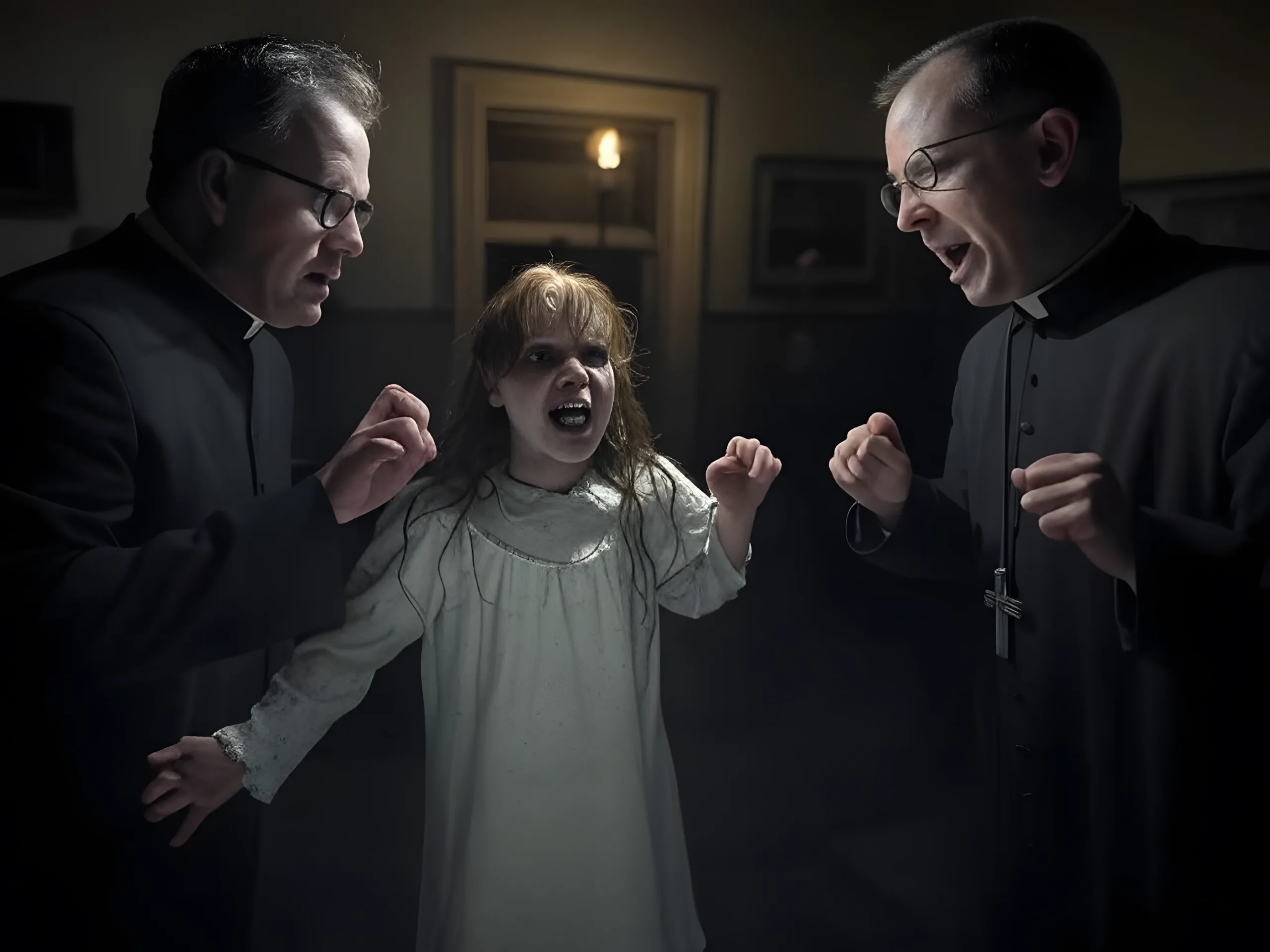
To bring a sense of reality to The Exorcist, director William Friedkin brought in Father Thomas Bermingham, a Jesuit priest, to help out. Father Bermingham wasn’t just familiar with Catholic rituals; he also taught at universities like Fordham and Georgetown. His expertise was essential, as he guided the crew on everything from the Latin prayers used in important exorcism scenes to how the Catholic faith was represented in the film.
But he did more than just provide advice. Before they began filming, Father Bermingham blessed the set to ensure everyone’s safety. This kind of ritual is not unusual for projects that touch on darker themes, yet it felt especially significant considering the film’s disturbing subject matter.
Father Bermingham even showed up in the film as the president of Georgetown University, which added an extra layer of authenticity to a story that dealt with some contentious issues.
The Disturbing Content of The Exorcist

Understanding why the story of “creeped out” priests has lingered requires us to appreciate how shocking and original the film was, even now.
Based on William Peter Blatty’s novel from 1971, the film tells the story of 12-year-old Regan MacNeil, who gets taken over by a malevolent spirit. Her mother, in a desperate bid to help her, turns to two priests for an intense exorcism, Father Merrin (played by Max von Sydow) and Father Karras (played by Jason Miller). The film pushed boundaries with its vivid depiction of possession, featuring Regan’s distorted body, harsh language, levitation, and the infamous head-spinning moment.
However, the fear wasn’t just about what we saw. The movie dives into heavy themes like faith, uncertainty, and the essence of evil, making it a deeply disturbing experience. For many viewers—and even some who worked on the film—The Exorcist turned into more than just a horror story; it became a chilling reflection of our most profound anxieties.
Did the Priests Really Feel “Creeped Out”?
Did Father Bermingham or any of the other priests actually walk off the set because they were uncomfortable with the film? The quick answer is no, not really.
Father Bermingham did find some parts of the movie a bit unsettling, but he stayed for the whole production. As a Jesuit priest, he was used to talking about good, evil, and the supernatural, and his role was to make sure that these themes were shown accurately and with respect.
The idea that priests left the set seems to be more of a rumor. While the film’s heavy subject matter might have affected those involved, there’s no solid evidence that any priest left due to fear. In fact, Father Bermingham was actively involved and even talked about the film in interviews after its release.
The Enchantment of Myth and Legend
Why has the tale of “creeped out” priests stuck around for so long, even if it’s not completely true? It all comes down to the unique vibe of The Exorcist and the way it has influenced culture over time.
When it first came out, The Exorcist was surrounded by chatter and fascination. There were stories of people fainting, feeling ill, or even fleeing the theaters while watching it. Weird things happening on set—like unexplainable fires, sudden injuries, and tragic losses among the cast—sparked talk that something dark was involved.
The involvement of actual priests added another layer of intrigue. For many viewers, having clergy present made the movie feel more real, making it hard to tell where fiction ended and reality began. With that in mind, the idea of priests being scared enough to leave the set fits perfectly with The Exorcist’s story as a film that challenged norms, both in what was shown and what happened behind the scenes.
Odd Events During Production

The story of the priests leaving might sound more like a legend, but it’s clear that strange things happened during the making of The Exorcist.
- A Mysterious Fire: Early in production, a fire erupted and destroyed much of the MacNeil family’s house, leaving Regan’s bedroom miraculously untouched. This is where many crucial scenes were filmed. The cause of the fire was never discovered, which only added to the film’s spooky reputation.
- Injuries and Accidents: Several cast and crew members faced injuries while working on the film. Ellen Burstyn, who played Regan’s mother, ended up with a serious back injury after being thrown to the ground in one scene. Linda Blair, who acted as Regan, also hurt her back due to the equipment used in the possession scenes.
- Tragic Deaths: After filming their scenes, both actors Jack MacGowran and Vasiliki Maliaros passed away. Even though these deaths weren’t directly linked to the movie, they helped fuel the ongoing legend of a curse.
- Unexplained Noises: Some crew members reported hearing strange sounds on set, and a few even mentioned feeling an odd presence while shooting.
These incidents, along with the film’s disturbing themes, have kept the stories about The Exorcist alive through the years.
Distinguishing Fact from Fiction

Here’s what we have figured out:
- Real Priests Took Part in the Production
Father Thomas Bermingham was there as a technical advisor and performed a blessing on the set. - Blessings Happen Often
It’s pretty standard to have a blessing for productions that explore darker subjects. - No Priests Walked Off the Set
Even though Father Bermingham felt a bit uneasy about some things, there’s no proof that he or any other priest left during filming. - The Story Lives On
The tale of frightened priests has become a part of The Exorcist’s story, adding to its fascination.
The Significance of These Stories

The tale of fleeing priests might not be completely accurate, but it certainly has its value. These stories add depth to The Exorcist, turning it from a simple film into a significant cultural experience full of both real and imagined elements.
For those who appreciate the film, these narratives bring an added sense of intrigue and dread, making it hard to tell where reality ends and fiction begins. Regardless of whether the priests were genuinely troubled, there’s no question that The Exorcist keeps holding our attention and striking fear, solidifying its place as a remarkable horror film.
Concluding Thoughts
The story about the “creeped out” priests might not tell the whole truth, but it shows how The Exorcist connects with our darkest fears. This film blends genuine religious elements, a deep psychological approach, and real terror, turning it into more than just a movie—it’s an artistic creation that goes beyond typical horror.
What are your thoughts? Have you heard any other tales about the making of The Exorcist? Do you think the film really has a “curse”? We’d love to hear your opinions in the comments!