I know comparing these two things may seem odd, but when I thought about it there are many similarities between them. First, I’ll explain what they are for the uninitiated. Since the idea of haunted video games has been around longer on the internet, I’ll begin with that. Usually, these take the form of online horror stories known as creepypastas which are basically the internet equivalent of campfire stories. Typically, they revolve around older video games from the 80s to the 2000s.
These stories tend to follow a certain beat. The protagonist either gets a bootleg version of a popular game or plays one they already own that they haven’t touched in years. Somehow it’s either haunted or wrong in some other way. Spooky stuff happens and the story ends. Obviously, that’s an oversimplified explanation.
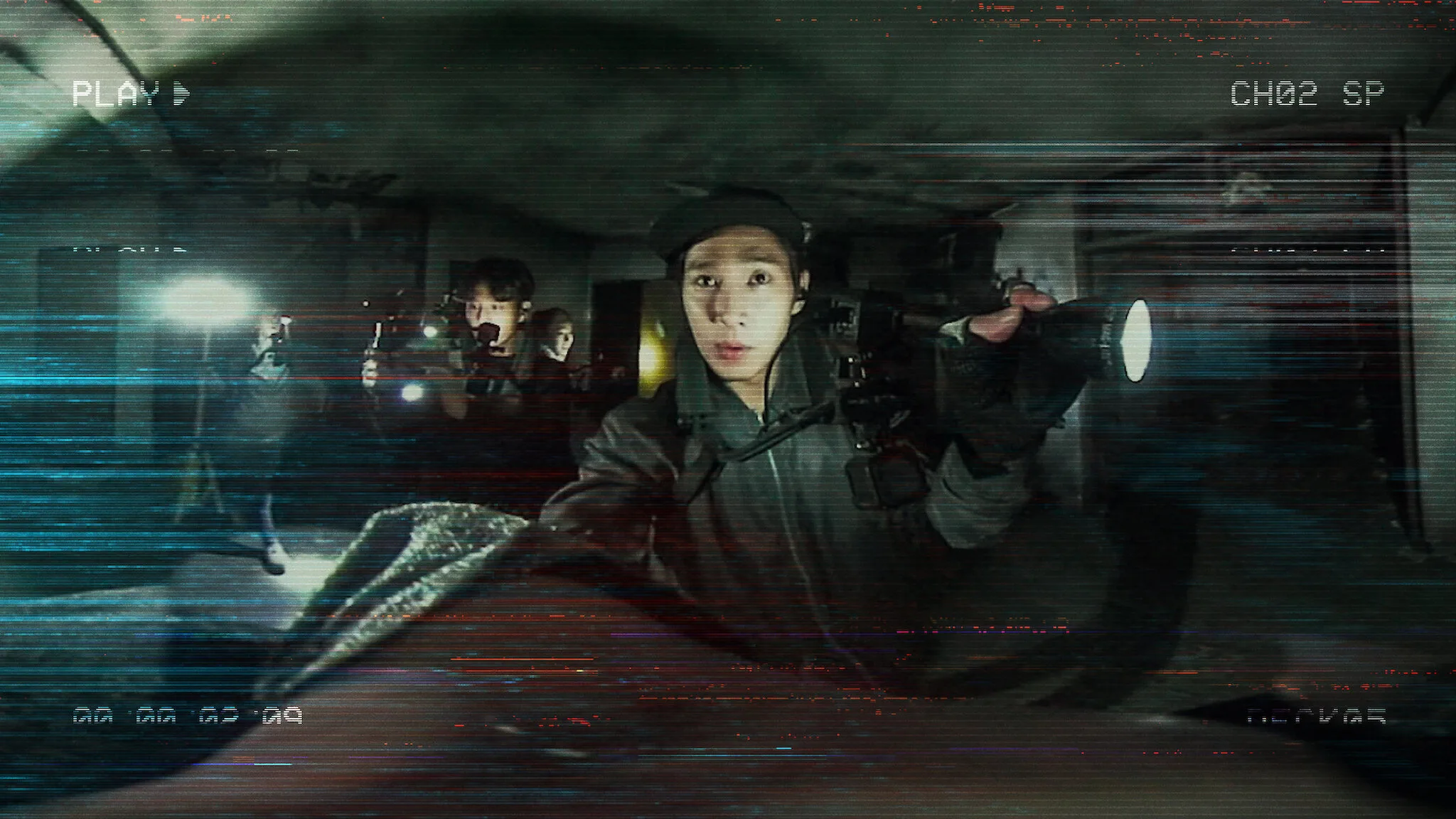
I’ll be getting more in-depth on it later. Moving onto analog horror, defining it is a bit broader. From what I’ve heard it tends to involve using the limitations of old home video cameras from the 80s to even the early 2000s to create scares. Unlike video game creepypastas, the storytelling analog horror creates isn’t quite so linear. The biggest advantage it has is being able to show as opposed to tell.
A picture is worth a thousand words as the saying goes which means a video is worth even more. Think of each one as a puzzle piece. With each one, you slowly start to realize some things about what’s going on. This can lend itself to complex storytelling. That isn’t to say video game creepypastas can’t be complex as well.
It’s just that they are more restricted since they have to stick to the pattern mentioned above. Whereas analog horror offers a lot more freedom. As long as someone sticks to the overall style, there aren’t many limits to the kinds of stories they can create that would fit the format. So, how are these things comparable exactly? Well, it occurred to me that the ways both create scares are kind of similar.
For one thing, both rely on technological limitations. With analog horror, the audio and video may be muffled due to the kind of home filming style it’s trying to emulate. Video game creepypastas in a similar fashion will describe glitched audio and graphics. There are many examples from either category I could list. However, I don’t want to overinflate this.
As of my writing this and doing more research, I’ve found some places saying that The War Of The Worlds is the earliest example of analog horror. I can kind of see it despite the whole panic around it being pretty overblown. The radio dramatization of H.G. Wells’ story performed by Orson Welles utilized the limitations of radio to create horror effectively and of course, his performance played a big part in that. Even though people knew it was fiction. I imagine those factors added to the realism and thus their fear while listening to it.
Talking solely about internet horror, the earliest examples not counting one-off videos seems to be the series, Local 58. In short, it’s an analog horror Youtube channel in the form of a news channel airing on local, as the name implies, television. I’d highly recommend it and afterward, maybe check out Film Theory’s videos on it to try and get the whole picture or at least one interpretation of it. Speaking of, they’ve also done plenty of videos on arguably the most popular series of analog horror, The Backrooms. One theory they have is that it takes place in a simulation kind of like a video game.
Are you beginning to see a connection? Hell, the whole premise happens when someone glitches through reality and finds themself in that ever-expanding place. Once there, the number of horrors they can encounter is limitless. With haunted video games, it’s kind of the same situation. Take pretty much any Pokemon creepypasta for example.
The horror created by glitching there is scary because it’s in contrast with something normally viewed as innocent. Although I don’t know if I’d use that word to describe a game where animals are forced to fight each other. That’s another topic, though. My point is, much like analog horror, the horror of video game creepypastas relies on the limitations of the consoles they are played on except in the opposite direction.
By that I mean, unlike analog horror depending on the restrictions of the format, video game creepypastas will push past them. For example, hyper-realism in games with low graphics by today’s standards makes certain things stand out in an eerie way. I’d be doing a huge disservice by only mentioning the Pokemon stories since those only pertain to handheld gaming. Therefore, I’ll be getting into console-based examples as well as pc. Now, in the case of video game creepypastas, one of the first things that come to mind is Ben Drowned.
Updated August 2026: Internet-born horror formats — explore our Marble Hornets deep dive and TikTok horror coverage.
Admittedly it has been quite some time since I’ve heard it. As a matter of fact, I had to skim through a summary of the story to refresh my memory. In doing so I’ve noticed certain elements of the story are similar to Local 58. Both go outside the boundaries of their original medium and take on a life of their own in the forms of other sites readers/viewers would need to visit to get a clue on the next bit of lore within the respective stories. I know Local 58’s site has a lot of hidden messages you have to search for and Ben Drowned apparently had a Youtube channel where if you deciphered a code, you’d gain access to the second part of the story.
As an aside, the channel Jadusable has a playsuit of Ben Drowned for those curious in checking it out. The code would lead to a website, where much like Local 58’s there’d be hidden codes and conversations that help things fall into place. Not only that, the overall distortions of that version’s gameplay are reminiscent of what you’d find in analog horror series. By that I mean, odd noises being played, characters you are familiar with or people not acting quite right, that sort of thing. Another analog horror series that has people behaving strangely is The Mandela Catalogue.
The story I’m going to be comparing it to is the Elder Scrolls Creepypasta titled, Jvk1166z.esp. For the sake of simplicity, I’ll be referring to it as The Morrowind Mod. First, I’ll give a rundown of The Mandela Catalogue. It concerns the people of Mandela County under threat of beings called alternates which come in a variety of forms. They can range from being nearly identical to the people they are trying to imitate to being unnervingly different from the human form.
What they do upon making contact with their victims is affect them with Metaphysical Awareness Disorder or MAD for short. This is a mental illness brought on by unwanted information, causing extreme paranoia and desire to commit self-harm in those afflicted. The Morrowind Mod at first seems to be a virus. However, when the player figures out how to make it work it leads to a bizarre experience of the game. In this version, almost every main character NPC is dead, the player’s health slowly goes down over time, and the other NPCs will go outside at night for a few minutes saying to watch the sky.
Oh, and there’s this figure known as The Assassin that appears if the player lets the health drain kill them. It wears a retextured version of The Dark Brotherhood armor, moves in a spider-like fashion, and will occasionally shriek to keep the player’s attention. I figured this would be worth mentioning. The more time one of the players dedicated to solving the mod’s mystery, the more, almost real, the assassin seems to become to the point where they dream it’s in their room. They even say they can hear it tapping on their window when they are awake.
What this has in common with The Mandela Catalogue is, in short, creating paranoia, whether brought on by a form of addiction or fear of being replaced. The main difference is analog horror is showing something that’s already happening whereas cursed video games are causing something to happen. With this in mind, which is scarier? The answer may appear to be a no-brainer. The one where people have no choice and no say in the things going on around them would no doubt be the most horrifying of the two, right?
I don’t think it’s that clear. What may actually give the cursed video game stories the edge is the fact the characters in them do have a choice. Short of some mysterious force not letting them shut off the game, it’s entirely up to them and yet they keep playing. To me, this highlights how self-destructive humans are. We know something is bad for us and yet we do it anyway.
It boils down to our ego being our undoing. This is frightening because it means ultimately the only ones we can blame is us. In a way, video game creepypastas encapsulate this. In spite of the flaws these kinds of stories usually end up falling prey to, I believe that aspect is what draws people to them. I’m briefly going to bring up the lost episode creepypastas since I guess you could technically consider them a form of analog horror. The reason I’ve neglected to mention them is that I find there’s not all that much variety within those kinds of stories to warrant bringing them into this discussion.
Also, with a lot of those stories, there are never any true stakes for the narrator other than getting spooked. Back to the topic at hand, I’ll say video game creepypastas, in the way they’re described, could be seen as interactive analog horror. Between the two, I definitely enjoy analog horror more for its variety, but I do think for certain video game creepypastas there’s merit. I guess it comes down to one question which I’ll conclude with.
Is it more terrifying, when you have no choice or when you make the wrong choice?
-
For several years now I have been writing stories relating to the horror or horror comedy genres. However, on here I will be giving my thoughts on different things relating to horror. I will try to have in-depth posts about what makes certain aspects of it work and when it does not. I will also be sharing other ideas related to it. Hopefully, you enjoy what I write and if you do, be sure to check out my links.
How you can support me!