Demented (1980): Hilariously Bad Revenge

Movie Reviews

6 min read

Demented 1980 Poster

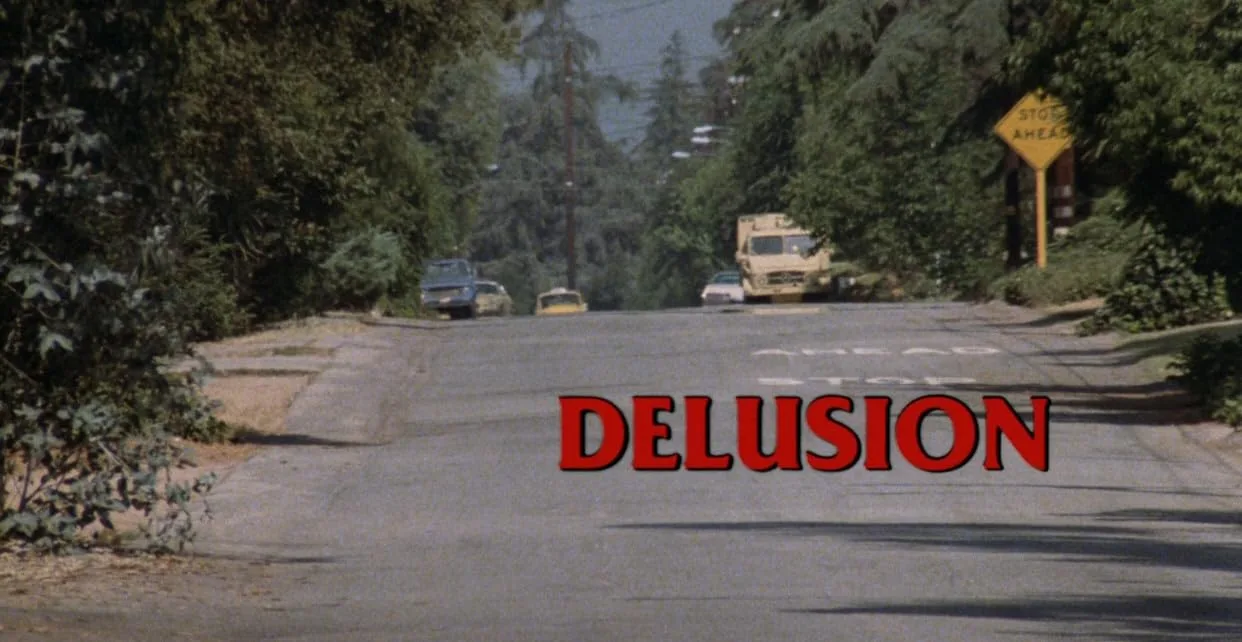
Demented isn’t just a film; it’s an experience, the kind you stumble into after a night of questionable choices, thinking, “Well, this can’t get any worse.” But oh, dear reader, it does. It’s not the type of movie you’d invite to your Sunday dinner. No, this is the kind of friend who shows up unannounced, reeking of cheap booze and bad decisions, telling tales so wild you’re not sure if you should laugh or call the cops.

Someone – let’s say it was either the ghost of Confucius or Helen Steiner Rice on a particularly bad day – once said there are no strangers, just friends we haven’t met yet. Well, if films were people, “Demented” would be that friend you meet once, under unfortunate circumstances, and immediately hope never comes back. Annoying, cheap, loony, offensive, obnoxious, flaky, and as boring as watching paint dry… yet so batshit insane that you’ve got a story to swap at the next bar crawl.

The film kicks off with a bang – or rather, a series of unfortunate events in a horse stable where Linda Rodgers (Sallee Young) gets the kind of welcome no one wants. Four guys with stockings over their heads decide she’s the entertainment for the evening. You’d expect the film to delve deep into the darkness of human nature, but no, it seems the filmmakers thought, “Hey, let’s do a low-rent version of a revenge flick.”

Enter Linda’s husband, Matt, played by the legend of adult cinema, Harry Reems. Here’s a man whose acting skills are as convincing as a three-dollar bill, proving once again that his true calling was in the less clothed arts. And Linda? Oh, Linda, portrayed by Sallee Young, whose performance swings from the melodramatic to the utterly absurd. Her voice, a shrill cacophony, could shatter glass – or your interest in the film.

The plot, if you can call it that, sees Linda returning from what they call a “sanatorium” – a place where I imagine they teach you how to look blankly into the camera while screaming. She’s back home, supposedly healing, but her hallucinations of her attackers and the neighborhood’s four new troublemakers decide to make her life a living hell. It’s like the script was written by someone who lost a bet.

Updated August 2026: So-bad-it’s-good cinema pairs with Toxic Zombies — both gloriously rotten.

This film tries to dance on the razor’s edge between horror and comedy but ends up doing a clumsy waltz into absurdity. The opening scene is brutal, sure, but the follow-up is so poorly executed that it’s like watching a clown at a funeral. The film stumbles through scenes with the grace of a drunken sailor, with Linda’s husband Matt, portrayed by Reems, being particularly unhelpful. He’s more interested in his mistress’s gold-digging antics than his wife’s recovery. His character, a doctor, is supposed to be the beacon of hope, but he’s as useful as a screen door on a submarine.

The neighborhood kids, in their infinite wisdom, decide to terrorize Linda further, wearing bizarre masks like they’re trying out for a low-budget version of “The Purge.” The terror they bring isn’t chilling; it’s more like watching a poorly rehearsed school play. Linda, left alone, starts seeing her attackers everywhere, blurring the lines between reality and her fractured psyche. These hallucinations are so unconvincing that you might start questioning your own sanity for watching this film.

The film’s climax, where Linda finally snaps, is meant to be shocking but ends up more amusing than horrifying, thanks to Young’s “crazy” voice, which sounds like she’s auditioning for a spot on “Gilligan’s Island.” She goes on a rampage, serving up some cold, not-so-bloody revenge with a side of steak and a dash of piano wire. It’s all so mishandled that you’re left wondering if the film was supposed to be a parody or just a very bad attempt at drama.

The pacing of “Demented” is like riding a rollercoaster designed by a mad scientist; it jerks you around, stops suddenly, and then plunges into the depths of incoherence. The cinematography? Well, it’s there. The editing feels like it was done by someone who just discovered how to use a pair of scissors. And don’t get me started on the special effects – or rather, the lack thereof. When Linda decides to get her revenge, the film pulls its punches, showing us nothing but implied violence, which in this context feels more like a cop-out than a stylistic choice.

Directed by Arthur Jeffreys, whose career seems to have ended with this cinematic debacle, and penned by Alex Rebar, “Demented” is a film that’s more memorable for its ineptitude than any real shock or horror. It’s the kind of movie you watch once, not for enjoyment but for the sheer spectacle of its failure. After that, you’re glad to see it return to the obscurity from whence it came, leaving you with nothing but a good story for the next time you’re out with friends who appreciate the art of the truly terrible.

This cinematic trainwreck is a testament to how low-budget and bad acting can turn a potentially serious subject into something laughably absurd. “Demented” doesn’t just spit on the grave of good filmmaking; it dances a jig on it, waving its arms wildly, completely oblivious to the art it’s supposed to represent. It’s a film that you’ll remember, not because it was good, but because it was so spectacularly awful that it becomes a benchmark for how not to make a movie.

“Demented” aims to be a tough revenge movie, but it mostly ends up being funny for all the wrong reasons. The acting is questionable, and the story is strange, making it more likely to make you laugh than feel scared. If you’re looking for real excitement or tension, this isn’t the film for you. It’s one of those movies where you can enjoy how badly it misses the mark. Because of this, it gets a skull rating of 💀 (1/5) – not really worth watching for horror fans.

About the Author

Next article

My View on Occult Cryptography

Paranormal

6 min read

Hieroglyphics on an ancient Egyptian scroll, illustrating the use of complex symbols for encryption in sacred texts

Hello, everyone. It’s Adam, and if you know me, you’re aware of how much I love uncovering the hidden layers that lie beneath what we see every day. I’m passionate about exploring the mysterious and the unseen, searching for the meanings that are often missed. Today, I want to share something really fascinating with you: a way of using numbers to create a kind of code.

This goes beyond just breaking codes; it’s a way to connect with a deeper language of spirituality. It helps us see how words and ideas are linked by the numbers they share.

We’ll look into how this method suggests that words with the same numerical values share a special spiritual meaning, possibly revealing deeper layers in sacred writings.

The relationship between occult practices and cryptography represents a rich subject for examination, spanning from ancient civilizations to the contemporary digital era.

An analysis of historical contexts reveals that secretive traditions, once confined to the medieval period, significantly influenced the development of cryptographic techniques.

This historical exploration connects mystics with mathematicians and investigates the ways in which secrecy, knowledge, and authority shaped the establishment of various cipher systems.

The origins of cryptography can be traced back to antiquity, where the demand for confidentiality extended beyond mere state protection to encompass mystical beliefs and divine aspects.

In ancient Egypt, priests utilized hieroglyphics not solely for decorative purposes but also as a specialized form of encryption designed to safeguard sacred texts for an exclusive audience.

Similarly, sacred geometry in ancient cultures, such as those in Babylon and Egypt, held considerable importance. Geometric patterns not only possessed architectural significance but also conveyed concealed messages.

These designs frequently contained numerical codes comprehensible only to the educated members of those societies.

In the context of Jewish mysticism, the Kabbalah introduces Gematria, wherein letters of the Hebrew alphabet are assigned numerical values.

This methodology facilitates a form of encryption based on numerical associations, suggesting that words sharing identical numeric values possess a common spiritual significance, thereby revealing deeper dimensions within sacred texts.

Intricate sacred geometry pattern from ancient Babylon or Egypt, suggesting hidden numerical codes within the design

The Connection Between Mysticism and Cryptography in the Medieval Era

The medieval era witnessed a resurgence of interest in both occult practices and clandestine communication, as distinctions between alchemy, magic, and early scientific inquiry became increasingly ambiguous.

Alchemists, in their pursuit of the philosopher’s stone, devised various ciphers to obscure their findings from general knowledge. Their methods ranged from straightforward substitution ciphers to intricate systems employing astrological signs or alchemical symbols. Grimoires served as compilations of secret knowledge, often containing encrypted portions to deter misuse. Furthermore, secretive organizations such as the Rosicrucians and Freemasons employed cryptographic techniques to maintain the exclusivity of their rituals and teachings, thereby further intertwining the occult with cryptographic practices.

The Renaissance: A Time of Renewed Knowledge and Cryptographic Growth

The Renaissance heralded significant advancements in the field of cryptography, coinciding with a revival of the arts and sciences and a renewed fascination with esoteric knowledge.

John Dee, a prominent figure of this period and advisor to Queen Elizabeth I, authored Monas Hieroglyphica, a text believed to embody universal secrets. Dee’s cryptographic endeavors were profoundly influenced by his mystical convictions, which led him to develop complex systems such as the Enochian language, intended for magical communication.

Johannes Trithemius, an abbot and occult scholar, also made notable contributions to the field through his influential work, Polygraphiae, regarded as one of the earliest texts on cryptography. Trithemius introduced steganography, a technique wherein concealed messages were embedded within ostensibly innocuous texts, paralleling the manner in which profound truths were veiled in simple narratives.

An alchemist's manuscript with astrological symbols and alchemical signs used as a cipher to protect secret knowledge.

The Enlightenment: Reason and Continuing Occult Fascination

The Enlightenment era placed emphasis on reason and scientific inquiry, during which cryptography began to adopt a more systematic structure while still retaining elements of mystical allure.

Cryptographic methodologies associated with Freemasonry played a significant role in the evolution of various techniques. Symbols, codes, and hidden meanings found within Masonic literature were utilized not solely for secrecy but as reflections on comprehension and existence.

Additionally, the correspondence of Mary Queen of Scots serves as a further illustration of the intertwining of cryptography and the occult. Her coded communications attracted the attention of Sir Francis Walsingham, known for his interest in mystical matters, thereby highlighting the connection between secrecy and esoteric practices in political contexts.

The Modern Shift: From Hidden Mysticism to Mathematical Clarity

As society transitioned into the Industrial Revolution and subsequently the digital age, cryptography evolved from the domain of mystics and scholars to that of mathematicians and computer scientists. Nevertheless, traces of occult ideologies persisted in subtle forms.

Alan Turing, widely recognized as a pioneer in modern computing, possessed a fascination with the philosophical dimensions of computing, echoing the ancient quest for understanding. His significant contributions through the development of the Enigma machine exemplify a persistent human aspiration to comprehend and manipulate the hidden layers of reality, akin to the objectives pursued by ancient alchemists.

Presently, there exists renewed interest in the occult, as evidenced by the contemporary utilization of digital sigils—symbols imbued with intention—reminiscent of ancient symbols employed for magical purposes. This phenomenon parallels the role of encryption keys, which serve as modern symbols designed to protect and empower information.

An image of a coded letter from Mary Queen of Scots, with symbols and numbers representing secret communication during her time.

The Continual Dance of Secrets and Symbols

The trajectory from ancient sacred texts to contemporary encrypted data represents not merely a transformation in technology but also reflects humanity’s ongoing desire to comprehend the unseen. The profound influence of the occult on cryptography transcends mere technique; it embodies a belief in the existence of deeper truths beneath the surface, emphasizing the necessity of safeguarding knowledge while recognizing the delicate balance between revelation and concealment.

As advancements in quantum cryptography and artificial intelligence continue to evolve, one may ponder whether contemporary pursuits still mirror the elusive truths sought by earlier practitioners engaged in their experiments and rituals. The enduring interplay of secrets and symbols stands as a testament to the resilient human spirit, continually striving to understand, protect, and transcend the known limitations of existence.

In navigating the advancements in cryptography, it is pertinent to reflect upon historical lessons that illuminate the connections between security, secrecy, and the preservation of knowledge, all the while acknowledging the lasting influence of the mystical amidst the intricate tapestry of human creativity and thought.

About the Author

Load next article My View on Occult Cryptography