Jurassic Triangle (2024) Movie Review

Movie Reviews

4 min read

Jurassic Triangle

In the realm of low-budget creature features, “Jurassic Triangle” emerges as a perplexing entry. Directed by Victor De Almeida and penned by Harry Boxley, this film promised an adventurous escape with its premise of colleagues stranded on a dinosaur-infested island. However, as I delved into the movie, it became clear that what was intended to be a thrilling survival story turned into a bewildering experience marred by inconsistent CGI and a scattered plot.

The story kicks off with a bizarre scene that immediately sets the tone for the rest of the film: three unnamed individuals stumble upon an odd assortment of items – a pile of logs, a tarp, and what looks like a gas-powered garden tiller on an uncharted island. This puzzling start is quickly overshadowed by these characters becoming dinosaur fodder, a rapid introduction to the island’s dangers.

We’re then introduced to the main cast – Drew (Darrell Griggs), waking from a nightmare, aboard a helicopter with Isaac (Toby Redpath), Beth (Sian Altman), and their pilot, Captain “Call me Andy” Rawson (Rob Kirtley). They are en route to a team-building retreat in the Caribbean, with another helicopter carrying Jason (Connor Powles) and Phillipa (Chrissie Wunna), piloted by Jenny (Dorothea Jones).

The helicopters encounter turbulence and crash on what appears to be more of the English countryside than anything tropical. This sets the stage for the real conflict as the survivors encounter the island’s prehistoric and monstrously hungry inhabitants.

The dynamic among the survivors, initially filled with corporate retreat enthusiasm, quickly devolves into a fight for survival. Chrissie Wunna as Phillipa shows potential as a leader, trying to maintain calm and rationality amidst the chaos. Connor Powles’ portrayal of Jason adds a layer of complexity, especially as they interact with the mercenaries they meet later.

The mercenaries, played by Andre Pierre, James Millen, and Amelie Leroy, add a human antagonist element, shifting the narrative from a simple survival story to one involving deceit and survival politics. Their performances, particularly Amelie Leroy’s, bring a much-needed edge to the film, though the character development remains thin across the board.

Updated August 2026: Dino-horror done cheap — read our Jurassic Hunt review for the Asylum-adjacent strain.

Where “Jurassic Triangle” notably falters is in its CGI and special effects. The dinosaurs and other creatures, which should be the centerpiece of terror, are hindered by low-budget CGI that lacks texture and realism. The designs show creativity, but the execution falls flat, failing to deliver the visceral impact needed in a monster movie. This is exacerbated by the appearance of a creature from “Monster Portal,” whose scream-induced explosions are more comical than terrifying.

Despite these visual shortcomings, there are a couple of practical effects, like a realistically portrayed broken leg, that manage to elicit a more genuine sense of horror.

Harry Boxley’s script is where the film’s primary inconsistencies lie. Scenes like finding coconuts in a non-tropical setting and characters dying randomly (seemingly from plot necessity rather than narrative logic) contribute to an overall sense of disarray. These elements could have lent themselves to a campy, so-bad-it’s-good film, but the lack of commitment to either genuine horror or intentional humor leaves the film in a limbo.

One of the most jarring elements is the film’s ending, which attempts to shock but ends up feeling unearned and predictable against the film’s established tone.

Victor De Almeida’s direction struggles to harmonize the film’s conflicting elements. The pacing is brisk, which in some cases helps move past the weaker CGI scenes quickly, but also rushes through moments that could have used more development. The film’s tone swings wildly, missing opportunities to lean into the absurdity of its premise for comedic effect or to build genuine suspense.

Final Thoughts

Despite its fast pacing, “Jurassic Triangle” struggles to maintain engagement. The combination of poor CGI, erratic storytelling, and missed opportunities makes it difficult for the audience to connect with the characters’ plight. The film ends up feeling like a hasty assembly of genre tropes without the necessary polish or commitment to make it memorable.

Rating: 2/5 – For fans of the genre, “Jurassic Triangle” might offer some ironic enjoyment, but for those seeking a coherent and engaging cinematic experience, this film is likely to disappoint.

About the Author

Next article

Crash (1996): Cronenberg’s Twisted Ballet

Movie ReviewsRetro Horror

7 min read

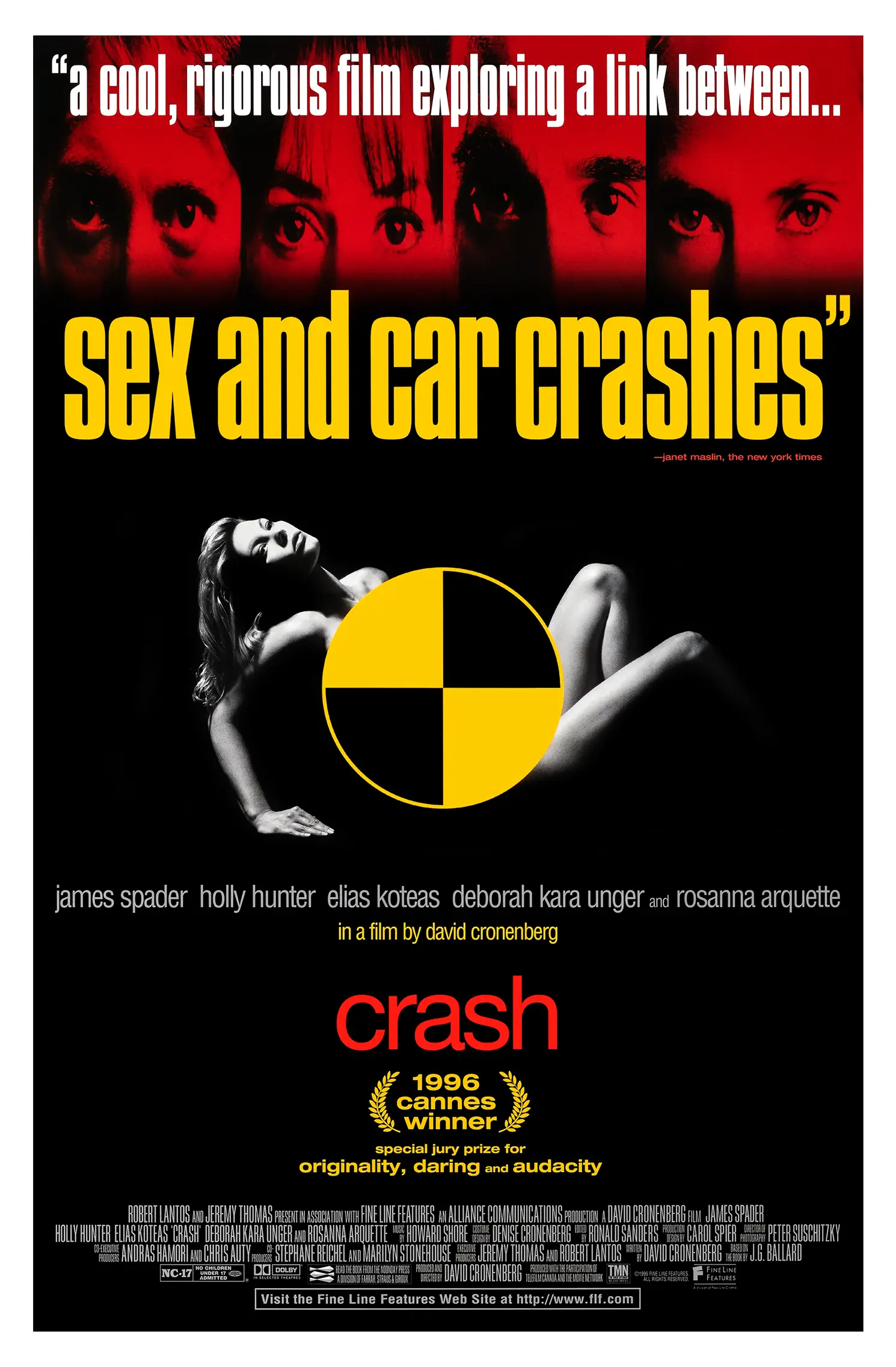
Crash (1996) Movie

Updated August 2026: Transgressive cinema pairs with our sexuality-in-horror watchlist — Cronenberg territory throughout.

David Cronenberg’s Crash is not merely a film; it’s a visceral experience, a descent into the darkest recesses of human desire where the boundaries between pleasure and pain, beauty and mutilation, become irrevocably blurred. This is not a film for the faint of heart, nor is it a film that seeks to titillate or shock for shock’s sake. Instead, Crash burrows deep beneath the surface of conventional morality, exploring the unsettling intersection of technology, death, and a uniquely disturbing form of sexual awakening.

The film’s central premise, the eroticization of car crashes, is a profoundly disturbing concept that immediately sets it apart from mainstream cinema. This isn’t a film about adrenaline junkies seeking thrills; it’s about a group of individuals who find genuine sexual gratification in the mangled metal and broken bodies that result from vehicular collisions. These are not thrill-seekers; they are pilgrims on a twisted quest for connection, seeking intimacy in the most unlikely and unsettling of places.

Cronenberg masterfully constructs a world where desire is inextricably linked to destruction. The film’s characters, adrift in a sterile, emotionally detached existence, find solace and arousal in the visceral reality of car crashes. The impact, the twisted metal, the spilled blood – these become the catalysts for a twisted form of intimacy. Sex becomes a performance, a ritual enacted amidst the wreckage, a desperate attempt to feel something in a world that has grown numb and disconnected.

Crash (1996) Unseen Image

The film’s unflinching exploration of paraphilia, specifically symphorophilia, is one of its most unsettling and compelling aspects. Cronenberg doesn’t shy away from the graphic depiction of arousal stemming from car crashes, forcing the audience to confront the unsettling reality of these desires. The characters, led by the enigmatic and manipulative Dr. Ballard (Elias Koteas), engage in a series of increasingly dangerous and disturbing encounters, blurring the lines between pleasure and pain, consent and exploitation. They seek out crashes, recreate famous accidents, and even inflict injuries upon themselves, all in the pursuit of a heightened sexual experience.

Crash also delves into the realm of body horror, a hallmark of Cronenberg’s filmography. The film finds a perverse beauty in the mangled flesh and broken bones, juxtaposing the allure of the human form with the grotesque reality of its vulnerability. Scars become erotic signifiers, reminders of the crashes that have both wounded and awakened these individuals. The film challenges conventional notions of beauty, suggesting that desire can be found in the most unexpected and even repulsive places. The human body, in its broken and scarred state, becomes a canvas for a new kind of eroticism, one that transcends the boundaries of societal norms.

The power dynamics within these sexual relationships are equally complex and disturbing. Characters manipulate and exploit each other’s vulnerabilities, using the shared fascination with car crashes as a means of control. Dr. Ballard, in particular, acts as a puppet master, orchestrating encounters and manipulating the desires of those around him.

The film doesn’t offer easy answers or moral judgments; instead, it presents a stark and unsettling portrait of human desire in its most extreme and unconventional form. It forces us to question the nature of consent, the boundaries of personal autonomy, and the lengths to which individuals will go in the pursuit of sexual gratification.

Crash (1996) Unseen Image

The film’s visual language is as stark and unsettling as its subject matter. Cronenberg employs a cold, clinical aesthetic, emphasizing the metallic sheen of cars and the starkness of the environments. The camera lingers on the details of the crashes, the twisted metal, the broken glass, and the injured bodies, forcing the audience to confront the visceral reality of these events. The soundtrack, a blend of industrial noises and unsettling electronic music, further enhances the film’s atmosphere of unease and disquiet.

Crash is not a film for everyone. It’s a challenging, provocative, and ultimately unforgettable exploration of the darker side of human sexuality. It’s a film that will stay with you long after the credits roll, forcing you to confront your own boundaries and question the nature of desire itself. This is a film that dares to explore the forbidden, the taboo, and the unsettling truth that sometimes, the things that repulse us are also the things that draw us in.

In conclusion, Crash is a masterpiece of transgressive cinema, a film that uses the language of horror to explore the complexities of human sexuality in a way that is both disturbing and undeniably compelling. It’s a film that will challenge your perceptions, push your boundaries, and leave you with a lingering sense of unease. This is not a film for everyone, but for those who dare to delve into its twisted depths, Crash offers a uniquely unsettling and unforgettable cinematic experience. It’s a film that will make you think, squirm, and perhaps even question your own understanding of desire and the human condition.

Crash (1996) Unseen Image

Crash is not simply a film to be watched; it’s a film to be experienced, dissected, and debated.

One of the most fascinating aspects of Crash is its ambiguity. Cronenberg doesn’t offer any easy answers or moral pronouncements. He presents the characters and their desires without judgment, leaving the audience to grapple with the implications of their actions. Are these individuals simply seeking a different form of connection in a world that has become increasingly sterile and detached? Or are they indulging in a dangerous and destructive obsession that will ultimately lead to their downfall? The film doesn’t provide a definitive answer, instead inviting the viewer to engage in a dialogue with the material and draw their own conclusions.

The film’s exploration of technology is also crucial to understanding its themes. The car, a symbol of freedom and mobility, becomes a fetish object, a source of both pleasure and pain. The characters’ obsession with cars extends beyond their sexual desires; they see them as extensions of themselves, as tools for transformation and transcendence. The act of crashing, of merging with the machine, becomes a symbolic act of rebirth, a way to shed their old identities and embrace a new, more visceral reality.

The performances in Crash are uniformly excellent. James Spader, as the detached and increasingly obsessed James Ballard, delivers a subtle and nuanced performance that perfectly captures the character’s descent into darkness. Holly Hunter, as the equally troubled Helen Remington, brings a raw intensity to the role, conveying both the allure and the danger of her character’s desires. Elias Koteas, as the enigmatic Dr. Ballard, is mesmerizingly creepy, embodying the film’s unsettling blend of sexuality and morbidity.

Crash (1996) Unseen Image

Crash is not a film that will appeal to everyone. Its graphic depictions of sex and violence, coupled with its challenging themes, will undoubtedly alienate some viewers. However, for those who are willing to engage with its complexities, Crash offers a rewarding and ultimately unforgettable cinematic experience. It’s a film that will stay with you long after the credits roll, prompting you to question your own assumptions about desire, morality, and the human condition.

In the landscape of contemporary cinema, Crash stands as a singular and uncompromising work of art. It’s a film that refuses to be easily categorized or dismissed. It’s a film that demands attention, provokes discussion, and challenges the very notion of what a horror film can be. Crash is a testament to the power of cinema to explore the darkest corners of the human psyche and to confront us with the unsettling truths that lie hidden beneath the surface of our everyday lives. It’s a film that will leave you breathless, disturbed, and ultimately, profoundly moved.

Crash (1996) Unseen Image

If you are looking for a film that will challenge your preconceptions, push your boundaries, and leave you with a lingering sense of unease, then Crash is a must-see. Just be prepared to confront the darker side of human desire in all its unsettling glory.

It’s a film that will make you think, question, and perhaps even re-evaluate your understanding of the world around you. Crash is a masterpiece of transgressive cinema, a film that deserves to be seen, discussed, and remembered. It’s a film that will leave its mark on you, just as the scars of a car crash leave their mark on the bodies of its characters. This is a film that truly gets under your skin.

About the Author

Load next article Crash (1996): Cronenberg’s Twisted Ballet