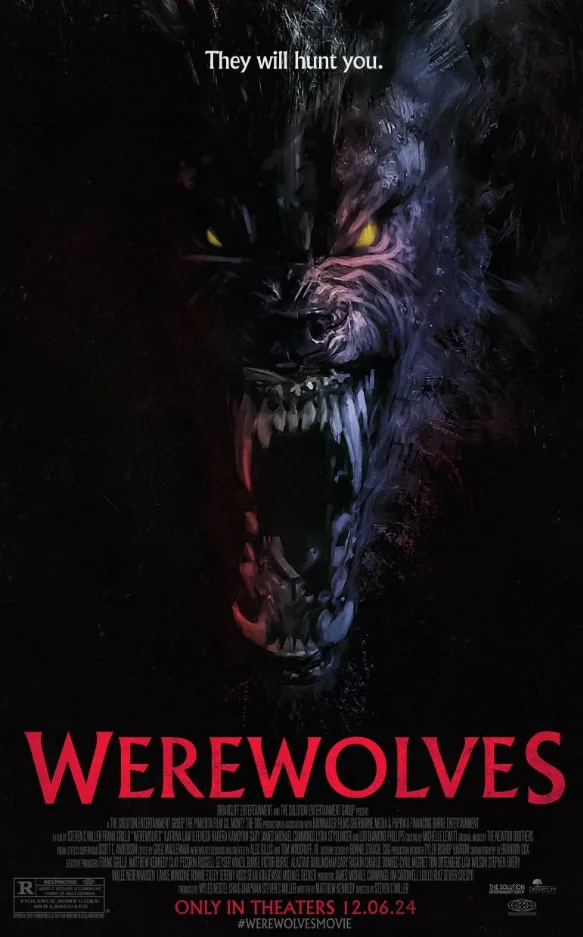
The moon is rising, the wind howls through the trees, and something feral stirs just beyond the edge of the shadows. Werewolves have always held a primal place in horror, embodying the raw, uncontrollable forces of nature lurking beneath human skin. And soon, horror fans will witness two new tales that promise to bring their own savage myths to life. Wolf Man, directed by Leigh Whannell and starring Julia Garner, Christopher Abbott, and Sam Jaeger, promises to immerse viewers in a chilling cat-and-mouse game as a family becomes the prey of a relentless werewolf under the full moon. Meanwhile, Werewolves, from Steven C. Miller, will send us into a world where science collides with folklore, as two scientists race to contain a mutation that turns ordinary people into ravenous beasts under the influence of a super-moon.
But the wait for these films can feel endless, like the seconds ticking by on a cold, eerie night when you know something is lurking nearby. In the meantime, there are plenty of other werewolf horrors that sink their teeth into this ancient legend—films that bring the terror of transformation to life in ways that leave a lasting mark.
Below is a list of essential werewolf movies to satisfy your craving for blood, fur, and moonlit terror while you wait.

An American Werewolf in London (1981)
John Landis’ An American Werewolf in London is the crown jewel of werewolf cinema. It’s a masterclass in blending sharp humor with grotesque horror, and it arguably features the most iconic transformation sequence ever put to film, courtesy of legendary makeup artist Rick Baker. The film follows two American backpackers who have a run-in with a werewolf on the English moors, and the cursed aftermath that haunts one of them. The film’s blend of tragedy, dark humor, and visceral horror makes it a must-watch for any werewolf fanatic.
The Howling (1981)
Released the same year as An American Werewolf, Joe Dante’s The Howling takes a very different approach to the werewolf mythos. Set against the backdrop of a secluded therapy retreat that hides a dark secret, the film is saturated with eerie atmosphere and practical effects that still hold up today. The werewolf transformations here are fluid, grotesque, and unforgettable, cementing The Howling as a foundational entry in the genre. It’s a film that toys with the psychological horror of losing control, combined with full-on creature feature madness.
Silver Bullet (1985)
Based on Stephen King’s novella Cycle of the Werewolf, Silver Bullet is a small-town horror story with a deeply personal edge. It’s a film about family, faith, and the terror of the unknown. Featuring a stellar performance by a young Corey Haim, the film follows a wheelchair-bound boy who suspects a local priest may be hiding something monstrous beneath the surface. The film’s charm lies in its mix of coming-of-age themes and classic werewolf horror.
Dog Soldiers (2002)
If you think werewolves can’t get any more brutal, Dog Soldiers will prove you wrong. Neil Marshall’s film pits a group of British soldiers against a pack of werewolves in the Scottish Highlands, turning the horror into a bloody siege. With its ferocious pacing, relentless action, and impressive creature effects, it remains one of the most intense werewolf films of the 21st century.
Ginger Snaps (2000)
If Ginger Snaps isn’t already on your radar, it should be. This Canadian gem is a biting commentary on the horrors of adolescence, with the werewolf curse serving as an allegory for puberty and female empowerment. Sisters Ginger and Brigitte are outcasts in their suburban high school until a chance attack by a werewolf changes everything. The film is dark, smart, and unapologetically gory, making it a standout in the werewolf canon. It’s also one of the few films that successfully blends body horror with feminist undertones.
Bad Moon (1996)

Bad Moon is often overlooked, but it’s a criminally underrated werewolf flick that deserves more attention. Centered around a family dog who suspects something is very wrong with his owner, the film takes a unique approach by giving the viewer a canine perspective on the horror. The werewolf design is a highlight, with the creature being both terrifying and tragic. It’s a lean, mean, underappreciated entry in the werewolf genre that’s worth revisiting.
The Wolfman (2010)

Universal’s 2010 remake of The Wolfman, starring Benicio del Toro and Anthony Hopkins, is a love letter to the original 1941 film, but with a modern twist. Gothic atmosphere drips from every frame, and the fog-soaked English countryside serves as the perfect backdrop for this tale of cursed bloodlines and monstrous transformations. The film is visually stunning, and the werewolf design is appropriately savage. While it didn’t receive the warmest reception upon release, it has since gained a cult following among fans of the genre for its dedication to old-school horror aesthetics.
The Company of Wolves (1984)

Directed by Neil Jordan, The Company of Wolves is a dark, dreamlike take on the werewolf fable, blending elements of folklore, fairy tales, and psychological horror. Based on Little Red Riding Hood, the film explores the deeper, symbolic meanings behind the werewolf myth, particularly focusing on the loss of innocence and the dangers lurking within human desires. Its surreal, nightmarish visuals and haunting atmosphere set it apart from more traditional werewolf fare. This is a film that lives in the gray space between fantasy and horror, and it’s a must-see for anyone who enjoys horror with layers of symbolism.
Late Phases (2014)

Late Phases is a hidden gem that deserves far more attention than it’s received. The film follows a blind war veteran, Ambrose, who moves to a quiet retirement community only to discover it’s plagued by a vicious werewolf. What sets Late Phases apart is its focus on character development and the unique perspective of its protagonist. Ambrose’s blindness adds a layer of tension to the proceedings, as he must rely on his other senses to survive the coming full moon. The practical effects, particularly the werewolf transformations, are a highlight, and the film delivers a satisfying blend of tension and gore.
Wer (2013)

Wer takes a unique spin on the werewolf myth by blending it with the found-footage and mockumentary style. Set in rural France, the film follows a defense attorney who begins to suspect her client, a man accused of brutal murders, may actually be a werewolf. What makes Wer stand out is its grounded, almost scientific approach to lycanthropy, treating it as a rare medical condition rather than something purely supernatural. The film builds tension masterfully, and when the transformation scenes hit, they are brutal and shocking, making Wer a fresh take on the genre.
Howl (2015)
Howl is a modern werewolf film that takes the claustrophobic horror of a train journey and transforms it into a night of survival against a pack of feral werewolves. When a late-night train breaks down in the middle of the woods, the passengers find themselves trapped as the creatures begin to circle. The film mixes survival elements with creature feature thrills, and the werewolf designs are suitably terrifying. Howl is a fast-paced, tension-filled ride that’s perfect for fans of more recent horror movies.
The Cursed (2021)
A newer entry into the genre, The Cursed (originally titled Eight for Silver) delivers a fresh perspective on werewolf folklore, blending historical horror with a hauntingly atmospheric period piece. Set in the late 19th century, it revolves around a cursed land, a mysterious beast, and the horrors that follow. The film’s slow-burn tension and gruesome imagery make it a standout in modern werewolf storytelling.
As the full moon rises and the anticipation builds for both Wolf Man and Werewolves, horror fans won’t have to wait much longer. With Werewolves, directed by Steven C. Miller, poised to release December 06, 2024, and Wolf Man from Leigh Whannell following close behind on January 17,2025, both films promise to bring fresh blood to the werewolf genre, but until these new entries sink their claws into theaters, there’s plenty of beastly carnage to enjoy from the films listed above.

Each of these titles offers a distinct way to explore the werewolf mythos—whether it’s the visceral body horror of An American Werewolf in London, the psychological unraveling in The Howling, or the action-packed survival horror of Dog Soldiers. These movies not only highlight the terror of transformation but also reflect the primal fears that come with losing control, being hunted, or becoming something monstrous. And let’s be honest, there’s something irresistibly chilling about the ancient curse of the werewolf, a creature that embodies both the thrill and horror of the unknown.
So, while you wait for these new nightmares to arrive, there’s no need to let the full moon pass in silence. Dive into the titles above, each gnashing its teeth and howling into the dark, ready to satisfy your hunger for werewolf terror. Whether you’re in the mood for a gothic tragedy, a bloody siege, or a twisted coming-of-age story, there’s a film on this list that will keep your nights filled with growls, snarls, and the unmistakable tension of knowing that something is lurking just beyond the light. After all, the night is long, and there’s always another howl on the wind.