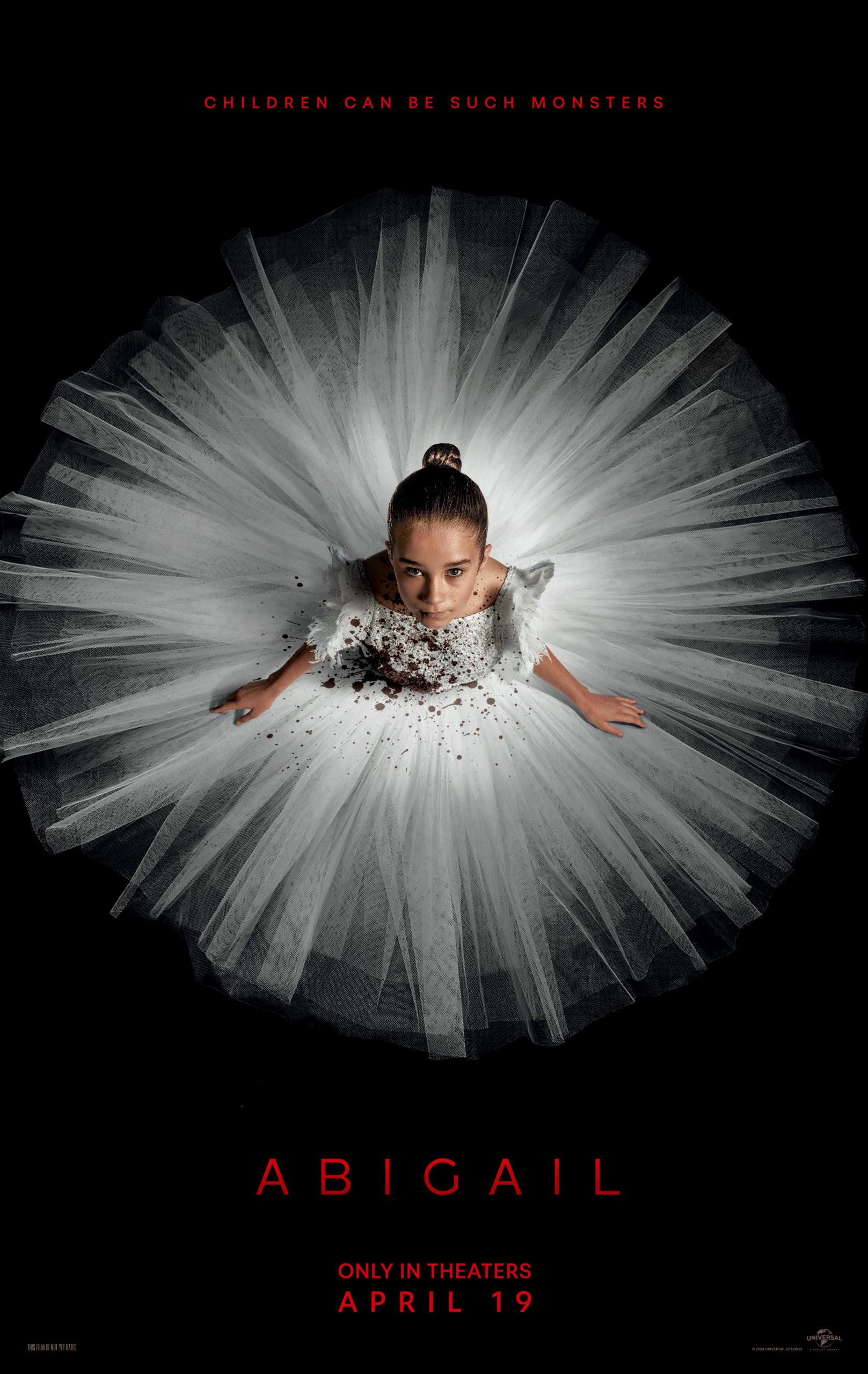
Abigail: Vampire Flick with Bite

Movie Reviews

10 min read

Abigail (2024)

Updated August 2026: Vampire cinema keeps evolving — compare with our other vampire reviews, including The Invitation.

From the twisted minds of directors Matt Bettinelli-Olpin and Tyler Gillett, the creative forces behind modern horror hits like Ready or Not and the latest Scream movies, comes Abigail – a deliriously demented genre mashup that takes the vampire mythos for a bloody new spin. Penned by Stephen Shields and Guy Busick, this cinematic descent into madness follows a ragtag crew of criminals who bite off more than they can chew when their kidnapping scheme goes fang-first into supernatural territory.

Abigail takes the familiar tropes of the vampire film and injects them with a wicked concoction of dark humor, bone-chilling thrills, and an audacious genre alchemy. It’s a deliriously fresh spin on an ancient legend that sinks its teeth into the crime caper formula, creating an unholy hybrid that demands to be experienced on the big screen.

With a deft grasp of horror aesthetics and a tongue planted firmly in cheek, Bettinelli-Olpin and Gillett have crafted a wild cinematic ride that remolds vampire lore for the modern age. From its gnarly practical effects to its twisted character arcs, Abigail keeps audiences on their toes, offering a bloody good time that’s part grisly gothic nightmare, part eccentric underworld romp. Buckle up for a vampire flick like no other – one that draws fresh blood from a centuries-old monster.

The actual plot of Abigail the movie is…

The setup is spooky, simple, and perfectly kooky: a ragtag gang of crooks plans the ultimate score – kidnapping 12-year-old ballerina Abigail for a $50 million ransom from her wealthy, nefarious father. The misfit crew of criminals includes the tough-as-nails Joey, unhinged wildcard Frank, tech geek Sammy, and several other sketchy archetypes with rap sheet resumes. But as they hole up in an isolated Gothic mansion to wait out the night, they realize too late that their pint-sized hostage isn’t just a precocious kid pirouetting alone in her room.

Oh no, young Abigail harbors a monstrous secret – she’s a full-on nocturnal, blood-draining vampire, and this bumbling band of felons has just locked themselves in with her for a night of high stakes, high body counts, and endless screams. Abigail’s true, bloodsucking nature is revealed in gruesome, uncompromising fashion as the hapless kidnappers find themselves at the mercy of her inhuman abilities and insatiable thirst for hemoglobin.

From there, it’s a relentless, frantic fight for survival as the remaining criminals try desperately to outwit and outrun the petite predator. Chaos reigns as Abigail’s merciless pursuit turns the mansion’s halls into a haunted house of horrors. With no apparent escape and their numbers dwindling, the gang must use all their criminal cunning and street smarts to make it through this one immortal night alive…or face an eternity as part of Abigail’s undead vampire brood.

With the night stretching on and their options running out, fractured alliances form and bitter betrayals unfold. Abigail’s bloodlust knows no bounds, and she effortlessly picks off the kidnappers one-by-one with a ruthless, almost balletic grace. It’s a brutal dance of death where every fancy pirouette could end in a fatal bite to the jugular. Can this dysfunctional crew put aside their differences long enough to take down the tiny terror in their midst? Or will Abigail’s fangs have the last laugh?

The Horror Facts Analysis of Abigail

Where Abigail truly excels is in its masterful direction, lush cinematography, and gripping performances. Directors Matt Bettinelli-Olpin and Tyler Gillett, fresh off their successful reboot of the Scream franchise, bring a stylish visual flair and wicked sense of fun that elevates the material far beyond its outrageous premise. Their background in revitalizing classic horror properties shines through, infusing even the most over-the-top and gory sequences with a palpable sense of dread and tension.

The filmmakers wring maximum atmosphere out of the Gothic mansion setting, utilizing its labyrinthine layouts and decaying opulence to chilling effect. Atmospheric lighting casts ominous shadows at every turn, while the camerawork snakes through the location’s shadowy corners and dimly lit hallways with a creeping menace. It’s the perfect haunted playground for Abigail’s supernatural game of cat-and-mouse.

The performances are what really allow this delirious vampire tale to sink its teeth in and draw blood. Young Alisha Weir is simply a revelation in the titular role, seamlessly shifting from innocent, pirouetting ballerina to ravenous, feral monster with hypnotic ease. Her physicality and body movement convey both Abigail’s delicate grace and animalistic menace in a way that’s utterly captivating. It’s a star-making turn that’s sure to lurk in audiences’ nightmares.

The ensemble cast of hapless kidnappers each inject plenty of flavor and grit into their roles as well. Melissa Barrera finds surprising depth as Joey, the reluctant ringleader torn between her criminal impulses and her motherly instincts. Dan Stevens seems to be having a blast as the unhinged, foul-mouthed wildcard Frank, bringing a manic, unnerving energy. Kathryn Newton holds her own as the resourceful tech geek Sammy too, providing some welcome dry humor amidst the escalating chaos.

On the script and narrative front, Abigail derives much of its devilish delight from its reimagining and reinvention of the 1936 vampire film Dracula’s Daughter. Writers Stephen Shields and Guy Busick have taken the core premise of that cult classic as a jumping-off point, imaginatively blending classic vampire horror with the twisty thrills of a crime caper premise. It’s a heady, tongue-in-cheek concoction of genre madness that keeps audiences on their toes.

This blending of horror and crime thriller elements allows the film to explore intriguing moral complexities amidst the utterly bonkers supernatural action. Each of the kidnapping crew is fleshed out with a nuanced backstory that adds layers of pathos, gray moral shades, and tough choices to their desperate struggle to survive Abigail’s unrelenting reign of terror. Despite their criminality, we can’t help but root for this ragtag group of antiheroes as the night wears on.

Dan Stevens and Melissa Barrera in Abigail (2024)

Was Abigail worth watching?

Abigail is a bloody delight, reveling in creative kills and delirious genre mashups while still finding room to build atmospheric tension and stylish visuals. One of its greatest strengths lies in how it revamps vampire lore for a new era with an ingeniously fresh spin. By taking the classic 1936 film Dracula’s Daughter as a loose inspiration, it crafts an original, subversive take on the archetypal vampire story.

The titular Abigail herself is a wonderfully unique creation – an aristocratic, bloodsucking ballet dancer who pirouettes between prim and proper decorum and feral, monstrous predator at the drop of a hat. Her vampiric abilities and the rules that govern her behavior keep audiences delightfully off-balance and guessing throughout. Just when you think you have a grasp on her powers and weaknesses, the film zigs in a new, unexpected direction.

Bettinelli-Olpin and Gillett’s film also deftly balances its horror elements with suspenseful thrills and a wicked vein of dark, gallows humor. The juxtaposition of Abigail’s almost whimsical ballet movements with her shockingly brutal bloodletting creates a unique tonal balance of the beautiful and the monstrous. One moment you’re chuckling at the absurd premise, the next you’re recoiling in gleeful terror as another kidnapper meets a grisly demise. It’s a tough tonal tightrope to walk, but the film navigates it with devilish skill.

Much of that tonal control can be attributed to the film’s impeccable atmosphere and visual style. The decaying Gothic mansion setting is a sumptuous playground for chills, with its ornate production design and moody lighting creating a palpable sense of dread around every shadowy corner. Bettinelli-Olpin and Gillett’s directorial flair brings this haunted playground to vivid, haunting life through a mastery of cinematic craft. Abigail is dripping with stylish camera movements and a keen eye for unsettling imagery.

That said, the film doesn’t always stick the landing when it comes to tying up its batty narrative threads. While largely airtight in its own delightfully demented internal logic for much of the runtime, Abigail does suffer from some contrived plot points and detours that strain credulity even for a vampire romp. A few too many instances of characters making head-scratching, illogical decisions typical of the horror genre pull you out of the otherwise taut and thrilling narrative.

Relatedly, some characters’ decisions, motivations, and arcs are rendered a bit uneven, particularly in the third act as the script tries to inject more grounded emotional backstories and pathos that don’t quite mesh with the film’s tongue-in-cheek spirit. These more serious notes largely fail to land among the otherwise gleefully bonkers supernatural chaos unfolding. While admirable in their ambition to add shades of gray, they come across as tonal missteps in an otherwise confident and deliriously over-the-top genre piece.

These are minor quibbles for a film firing on so many delirious cylinders. When Abigail is leaning full-tilt into its batty premise and not getting bogged down in clunky character dramatics, it’s an absolute scream – a thrilling revamp of vampire lore that isn’t afraid to go for the jugular with both teeth and tongue planted firmly in cheek. For horror fans, genre lovers, and anyone who delights in outrageously fresh spins on the classic movie monster, it’s a must-see that draws rich, new blood for an ancient legend.

Kevin Durand, Kathryn Newton, William Catlett, and Melissa Barrera in Abigail (2024)

Our Verdict

I can confidently say that Abigail is one of the most wildly entertaining and ingenious genre mashups I’ve seen in quite some time. Matt Bettinelli-Olpin and Tyler Gillett have breathed fresh, bloody new life into the vampire movie canon in ways I didn’t think were possible. By taking the archetypal vampire mythology and flipping it on its head with audacious twists and turns, they’ve carved out a unique niche that feels both reverentially respectful of the classics while also boldly modernizing the lore for a new generation of audiences.

The sheer impact of Abigail lies in how it proves that even the most well-trodden horror premises can be subverted in delightfully unexpected ways when put in the right creative minds. As a diehard horror fan myself, this film was an absolute no-brainer must-see delight from the moment that tantalizing premise was announced. And I’m thrilled to report it more than delivered on that bonkers potential with a gnarly, no-holds-barred romp that doesn’t pull a single punch.

But here’s the truly impressive part – despite luxuriating in over-the-top graphic violence and pushing the boundaries of good taste, Abigail’s self-aware comedic streak and deft balance of tones make it shockingly accessible for general audiences as well. Thanks to the filmmakers’ impeccable command of genre thrills and black humor, literally anyone can buy a ticket for this wildly entertaining cinematic roller coaster ride.

When the credits rolled, I walked away in awe of just how singular and assured of a revamp this was for the iconic vampire genre. By straddling the line between legit scares and tongue-in-cheek comedy with devilish glee, Bettinelli-Olpin and Gillett have added a refreshing new color to horror’s classic black and red palette. Backed by a phenomenally game cast giving it their all and unmistakable directorial verve, Abigail stands tall as a fang-in-cheek supernatural romp that draws rich, new blood for that immortal movie monster. Mark my words, this ballerina vampire’s debut will go down as an unequivocal cult hit for the ages. I can’t wait to see where this creative team sinks its teeth into next.

About the Author

Next article

“Late Night with the Devil” Review: A Devilishly Fun Descent Into 70s Occult Madness

Movie Reviews

12 min read

Late Night with the Devil (2023) Book

The devil works hard, but Late Night with the Devil works harder. This audacious horror mind-bender dares to go where few have gone before – straight into the musty, shag-carpeted, wood-paneled depths of a 1970s talk show broadcast studio. It merges the ooky spookiness of a demonic possession frightfest with the glitzy, hollow-eyed razzmatazz of old-timey boob-tube programming. The unholy offspring of The Exorcist and The Gong Show, if you will.

The devious setup? Jack Delroy (David Dastmalchian going full wig and facial hair) is a fading talk show host staring down the barrel of cancellation. In a desperate play for relevance during 1977’s all-important “sweeps week” ratings period, he stacks his Halloween episode lineup with a rogues’ gallery of paranormal kookiness. We’re talking a spoon-bending psychic, a Houdini-esque magician debunker, a parapsychologist with a possessed kid in tow, and more sketchy characters from the occult underbelly. What could possibly go wrong?

But here’s the devilishly clever twist – Late Night with the Devil isn’t just aping the look, vibe, and format of vintage TV for kicks. No, writer/directors Colin and Cameron Cairnes have gone the full unhinged distance, crafting the entire movie as an unearthed archival relic, a haunted “master tape” of Jack’s ill-fated, cursed broadcast from 45 years ago.

We get the whole shebang – from the cheesy opening credits sequence (complete with funky 70s animated flair) to the lame jokes and canned laughter, the phony ad breaks hawking quintessentially 70s products, and fly-on-the-wall flashes of behind-the-scenes chaos as the night descends into chaos. It’s like tuning in live to some unholy public access channel beamed in from a nightmarish parallel dimension where the dark arts overran the airwaves.

The devilish ingenuity of Late Night with the Devil lies in its audacious premise – using the hokey, dated format of a 1970s broadcast television talk show as the framing device for a slow-burn descent into occult horror madness. On its surface, this gambit seems almost too clever for its own good, a meta gimmick that runs the risk of derailing any genuine scares or dramatic stakes.

But the Cairnes brothers’ deft handling of this ambitious concept is what allows it to transcend mere novelty into a legitimately unsettling and atmospheric frightfest. By fully committing to the lo-fi, live-on-tape aesthetic of the era, they craft a beguiling sense of time and place that makes you feel like you’re truly an audience member watching this inauspicious Halloween broadcast unfold in real time back in 1977.

The creeping dread seeps in gradually, with the first act playing out as a relatively tame, kitschy recreation of the kind of oddball guest lineup and corny showmanship that was de rigueur for gathering ratings in those long-gone days of appointment viewing. Jack Delroy’s in-studio banter and smarmy glad-handing sells the illusion, while the commercial interludes for quintessentially 70s products like seafood lognets and discount cigarettes are a delightful exercise in period-accurate production design.

But then, almost imperceptibly, the ominous vibes start creeping in around the edges. The interviews with the self-proclaimed psychic and his skeptic nemesis take on an increasingly antagonistic tone. Strange, inexplicable occurrences in the studio audience hint at darker forces stirring. And when the main event finally arrives – a vulnerable young girl purported to be possessed by a demonic entity – the atmosphere has been exquisitely prepared for a literally hellish unraveling.

David Dastmalchian in Late Night with the Devil

The Cairnes make inspired use of the talk show’s inherent format, baking in natural tension-building set pieces through pre-taped segments, dramatic commercial cliffhangers, and faux backstage vignettes that blur the line between performance and reality. We get to experience Jack’s increasingly desperate attempts to keep his sinking ship on course while navigating the egomaniacal whims of his unhinged guests. The result is a slow boil that draws you deeper and deeper into the madness before unleashing its full demonic furor.

IT CAPTURES THE ESSENCE OF THE 70’S

Where Late Night with the Devil truly slays, however, is in its obsessively meticulous recreation of the sights and sounds of 1970s television. From the second those warmly gauzy opening credits roll, oozing with groovy animated flair, you’re transported back through a shag-carpeted wormhole to an era when the boob tube reigned supreme.

The talk show set design is utterly impeccable, from the wood-paneled walls and rabbit-ear antenna microphones to the vintage RCA cameras perched around the stage like unblinking robot cyclops eyes. Every detail feels ripped straight from the dustiest archival vault – the garish patterned curtains, the kitschy backdrop graphics, the chintzy product emplacement. You can practically smell the stale cigarette smoke wafting through the air.

The costuming, hair, and makeup work is similarly a master class in period authenticity. Dastmalchian’s jet-black bouffant and thick porn ‘stache are the very embodiment of smarmy 70s showmanship. The studio audience members all look like fugitives from some lost thrift store catalog, with their loud polyester prints, bell bottoms, and feathered shag cuts. Even subtle details like the boxy oversized eyeglasses and chest-hair-baring wide lapels feel ripped from the era.

Visually, the Cairnes brothers and cinematographer Matthew Temple bathe every frame in the hazy, high-contrast, slightly desaturated aesthetic that was a trademark of the multi-camera video look back then. The lighting is soft yet garish, with ample lens flares and blown-out highlights that mimic the technical limitations and artistic choices of the format. Handheld camerawork for the “backstage” sequences has that distinctly jittery, nervous quality of local news reporting from the era.

Georgina Haig in Late Night with the Devil

All of these fastidious period touches create an aura of authenticity that renders Late Night with the Devil utterly transporting. You completely buy into the illusion that you’re watching this ill-fated broadcast unspool before your very eyes, flaws and all…which makes the gradual tonal shift into sheer demonic chaos all the more impactful.

That said, there are a few minor missteps that slightly undercut the verisimilitude. Some of the computer graphics depicting “archival footage” degradation and glitches have a distinctly modern, almost too clean quality that takes you out of the moment. And while the copious practical gore effects are suitably splattery, a few of the more outré sequences involving bodily mutilation and transformation veer a bit too far into CGI overload in a way that clashes with the overall retro vibe. But these are mere nitpicks in an otherwise breathtakingly immersive production.

At the dark, pulsing heart of Late Night with the Devil’s descent into madness lies David Dastmalchian’s remarkably layered turn as Jack Delroy, the beleaguered talk show host trying to keep his sinking ship afloat. Dastmalchian has carved out an impressive career playing unhinged supporting weirdos, but here he gets the chance to take center stage and showcase his impressive versatility.

On one level, he fully inhabits the classic mold of the smooth-talking, glad-handing TV showman – the plastered-on grin, the rapid-fire banter, the carefully rehearsed gestures and crowd-pleasing bonhomie. You can easily imagine this Jack Delroy holding court on the legendary talk shows of the 70s.

But there are constantly flickering hints that something is slightly…off about this guy. Dastmalchian imbues Jack with a subtly simmering mania lurking behind the polished veneers, a desperation and hunger for relevance that grows more unnerving as the night progresses. In the “backstage” segments, we glimpses of startling vulnerability and grief as this showbiz pro grapples with personal demons of his own.

It’s a beautifully calibrated performance that keeps you guessing – is Jack a willing participant in the devilish doings about to unfold? An enabler blinded by ambition? Or an increasingly powerless bystander being swept up in a maelstrom he can’t control? Dastmalchian’s nuanced work allows for multiple interpretations, making Jack a compellingly unpredictable anchor amid the escalating chaos.

The ensemble surrounding Dastmalchian is equally on-point, with each guest star crafting a vivid caricature that both celebrates and subtly subverts the tried-and-true tropes of the format. As the smug, mustachioed “debunker” Carmichael, Ian Bliss channels equal parts Harry Houdini and Johnny Carson-era skeptic rushingto expose any whiff of paranormal chicanery. His sparring sessions with Fayssal Bazzi’s delightfully hammy psychic charlatan Christou are a pitch-perfect rendition of the kind of thinly-veiled contempt and one-upmanship that was a staple of such televised confrontations.

But it’s Laura Gordon as parapsychology expert Dr. June Ross-Mitchell and Ingrid Torelli as her young, haunted charge Lilly who truly unnerve. Gordon has a masterful grasp on the kind of telegenic self-seriousness and faux-intellectual gravitas that lent specious credibility to 70s-era paranormal media. And Torelli’s ability to toggle between fragile innocence and feral, possessed menace is a genuine tour-de-force that brings the scares home.

The entire ensemble demonstrates a remarkable cohesion and lived-in camaraderie that makes you believe they’ve been working together for years on some long-forgotten public television channel. Their chemistry is a big reason why the illusion of being transported to another time remains completely intact, at least until all hell quite literally breaks loose.

Is Late Night with the Devil a true Horror Film?

While Late Night with the Devil initially lures you in with its meticulous recreation of 1970s TV kitsch, complete with cheesy jokes and gaudy set dressings, the Cairnes brothers steadily tighten the vice of dread and unease. The horror elements are introduced gradually, creeping in through the edges until the whole garish spectacle descends into a bona fide nightmare of possession and demonology.

It starts small at first – odd background details in the studio audience shots, strange glitches and audio distortions hinting at darker forces stirring. The interviews with the “psychic” Christou and his nemesis debunker Carmichael have an undercurrent of antagonism and mutual contempt that grows increasingly unnerving. Little moments of uncomfortable silence and strange phenomena poke through the showbiz veneer.

But it’s the arrival of parapsychologist Dr. June Ross-Mitchell and her young charge Lilly that kicks the atmospheric dread into high gear. Laura Gordon’s icy self-seriousness and Ingrid Torelli’s deeply haunting vulnerability make for a potent combination as we learn about Lilly’s dark past in a satanic cult. The gradual unspooling of her traumatic experiences is downright chilling, made all the more unsettling by the mundane talk show trappings surrounding it.

From there, the Cairnes adeptly employ the very structure and format of the broadcast to escalate the tension beat by beat. Ominous pre-taped segments and abrupt commercial breaks leave you hanging on cliffhangers. Flashes of chaotic “behind-the-scenes” footage hint at something going disastrously awry just offstage. The multi-camera setups allow for slow pans and ominous visual reveals that will have you scouring every corner for signs of the encroaching evil.

And once that evil is finally unleashed in all its grotesque, body-horror glory…hoo boy. The climactic sequences of Late Night with the Devil are an unrelenting barrage of some of the gnarliest, most depraved makeup and creature effects this side of the Renaissance Faire from Hell. Levitations, mutilations, bodily violations, Lovecraftian mutations – it’s a veritable smorgasbord of occultic shlock and gross-out visuals realized with utterly uncompromising ferocity.

Yet for all the deliriously over-the-top extremity on display, the Cairnes maintain an admirable tonal balance between campy fun and genuine skin-crawling terror. There’s an impish glee to even the most outrageous set pieces, a winking acknowledgment of the film’s schlocky roots that keeps things from getting too sadistically bleak. But they never stray too far into pure self-parody either – the scares still get under your skin and burrow deep.

It’s a tough needle to thread, marrying such an unabashedly silly premise with legitimate frights. But Late Night with the Devil pulls it off with devilish skill and showmanship to spare. Much like the beloved Nightmare on Elm Street franchise in its prime, it revels in absurdist excesses and winking irreverence while still keeping you firmly trapped in a hellish funhouse of visceral, primal horror. It’s a total blast, as long as you’re willing to pledge at least a small part of your soul to the dark delights on display.

Should you watch this movie?

As the credits rolled on Late Night with the Devil, I found myself letting out a long, satisfied exhalation – the kind that comes after being fully immersed in a singularly bold and audacious work of horror artistry. This isn’t just another been-there-possessed-that demonic shlock-fest, but rather a wildly inventive genre mashup that fuses its occult trappings with the unlikely framing device of a 1970s talk show broadcast gone cosmically awry.

From its spot-on period recreations and obsessive attention to detail to the slow-burn mastery of its atmospheric tension-building, the Cairnes brothers demonstrate a true virtuoso command of their craft. They’ve concocted a bravura feat of sustained world-building that fully convinces you that you’re an eyewitness to an unearthed relic of televised Satanism run gloriously amok.

Not that the film is some dusty exercise in nostalgia porn, content to merely bask in its own stylistic reverence. Once the demonic mayhem is unleashed in all its splatstick glory, Late Night with the Devil turns deliriously, even transgressively unbound in its excesses. I haven’t seen practical creature effects and makeup wizardry this deliriously unhinged and gut-churningly visceral since the golden age of possessed-kid shockers like The Exorcist and The Evil Dead. It’s a non-stop barrage of Lovecraftian body warping, spontaneous mutilations, and all manner of blasphemous grotesqueries that had this jaded horror vet squirming with semi-guilty glee.

That’s not to say the film is entirely without its flaws. A few of the more overtly CGI-laden sequences feel a tad too slick and modern compared to the analog charms on display elsewhere. And while I appreciated the extra context provided by the fly-on-the-wall “backstage” vignettes, they also slightly undermined the found footage authenticity by repeatedly pulling back the curtain.

But these are relatively minor nitpicks in what is ultimately a wildly entertaining, breathlessly inventive, and downright ballsy slab of possessed primetime terror. The Cairnes have conjured up a true cult classic in the making – a hilarious and horrifying reminder that sometimes, the devil’s greatest trick is coming to you live via the unholy airwaves. For horror fans with strong constitutions and a taste for the deliriously unhinged, I give Late Night with the Devil an ecstatic 666 out of 666. Tune in, turn on, and get absolutely possessed.

About the Author

Load next article “Late Night with the Devil” Review: A Devilishly Fun Descent Into 70s Occult Madness